Pharmacological cardiotoxicity: Difference between revisions
CSV import |
CSV import Tags: mobile edit mobile web edit |
||
| Line 31: | Line 31: | ||
{{pharmacology-stub}} | {{pharmacology-stub}} | ||
== Pharmacological_cardiotoxicity == | |||
<gallery> | |||
File:Effect_of_antiarrythmics_on_nodal_action_potential.png|Effect of antiarrhythmics on nodal action potential | |||
File:Open_and_closed_conformations_of_ion_channels.png|Open and closed conformations of ion channels | |||
File:Ventricular_Action_potential.png|Ventricular action potential | |||
File:Early_afterdepolarization.png|Early afterdepolarization | |||
</gallery> | |||
Latest revision as of 04:57, 18 February 2025
Pharmacological Cardiotoxicity
Pharmacological cardiotoxicity refers to the detrimental effects on the heart caused by pharmaceutical drugs. This condition can manifest through various symptoms and signs, ranging from mild to severe, including but not limited to arrhythmia, myocardial infarction, heart failure, and even sudden cardiac death. Understanding the mechanisms, risk factors, and management strategies for pharmacological cardiotoxicity is crucial for healthcare professionals to mitigate these adverse effects and ensure patient safety.
Causes and Mechanisms[edit]
Pharmacological cardiotoxicity can be caused by a wide range of drugs, including chemotherapy agents, antidepressants, antipsychotics, and cardiovascular drugs. The mechanisms of cardiotoxicity vary depending on the drug but generally involve direct or indirect damage to the myocardium, disruption of electrolyte balance, or interference with the heart's electrical conduction system.
Chemotherapy Agents[edit]
Chemotherapy agents, particularly anthracyclines such as doxorubicin, are well-known for their cardiotoxic effects. The mechanism involves the generation of free radicals and oxidative stress, leading to myocardial cell death and fibrosis. Other chemotherapy drugs, like trastuzumab, cause cardiotoxicity through different mechanisms, such as HER2 receptor blockade, which can impair cardiac function.
Antidepressants and Antipsychotics[edit]
Certain antidepressants and antipsychotics are associated with cardiotoxicity, primarily through their effects on the heart's electrical conduction system, leading to arrhythmias. For example, tricyclic antidepressants can cause QT prolongation, a condition that increases the risk of developing life-threatening arrhythmias.
Cardiovascular Drugs[edit]
Ironically, some drugs used to treat cardiovascular conditions can also have cardiotoxic effects. For instance, beta-blockers, while beneficial in managing hypertension and angina, can exacerbate heart failure in some patients. Similarly, certain diuretics can lead to electrolyte imbalances, increasing the risk of arrhythmias.
Risk Factors[edit]
Risk factors for developing pharmacological cardiotoxicity include pre-existing heart conditions, high doses or prolonged use of cardiotoxic drugs, combination therapy involving multiple cardiotoxic agents, and certain genetic predispositions that affect drug metabolism.
Diagnosis and Management[edit]
Diagnosis of pharmacological cardiotoxicity involves a combination of patient history, physical examination, electrocardiogram (ECG) findings, and biomarkers such as troponin levels. Imaging studies, including echocardiography and cardiac MRI, can also be useful in assessing myocardial damage.
Management strategies focus on preventing or minimizing cardiotoxic effects, which may involve dose adjustments, switching to less cardiotoxic drugs, or discontinuing the offending agent. In cases where cardiotoxicity has already developed, treatment may include medications to manage symptoms (e.g., ACE inhibitors for heart failure) and interventions to address the underlying cardiac condition.
Prevention[edit]
Prevention of pharmacological cardiotoxicity is an important aspect of patient care, particularly in individuals at high risk. Strategies include careful selection of drugs, monitoring for early signs of cardiotoxicity, and patient education on the potential risks and symptoms of heart-related side effects.

Pharmacological_cardiotoxicity[edit]
-
 Effect of antiarrhythmics on nodal action potential
 -
 Open and closed conformations of ion channels
 -
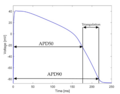 Ventricular action potential
 -
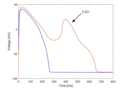 Early afterdepolarization


