Genetic distance: Difference between revisions
CSV import Tags: mobile edit mobile web edit |
CSV import |
||
| Line 31: | Line 31: | ||
{{Genetics-stub}} | {{Genetics-stub}} | ||
{{Evolution-stub}} | {{Evolution-stub}} | ||
<gallery> | |||
File:The_history_and_geography_of_human_genes_Luigi_Luca_Cavalli-Sforza_map_genetic.png|Genetic_distance | |||
File:Divergence_timeline_between_species.png|Genetic_distance | |||
File:Peripatric_Speciation.svg|Genetic_distance | |||
File:Kimura_two_parameter_substitution_model.png|Genetic_distance | |||
File:Kimura_three_parameter_substitution_model.png|Genetic_distance | |||
File:Genetic_similarities_between_51_worldwide_human_populations_(Euclidean_genetic_distance_using_289,160_SNPs).png|Genetic_distance | |||
</gallery> | |||
Latest revision as of 11:48, 18 February 2025
Genetic distance is a measure of the genetic divergence between species or between populations within a species. Populations with many similar alleles have small genetic distances. This concept is used in the fields of genetics, evolutionary biology, and conservation biology to help scientists understand the genetic relationships between different groups of organisms.
Definition and Measurement[edit]
Genetic distance is quantified through various metrics, such as Fixed differences, Nei's standard genetic distance, and the Cavalli-Sforza chord distance. These measures compare genetic markers, such as DNA sequences, microsatellites, or single nucleotide polymorphisms (SNPs) across different populations to estimate their evolutionary separation. The choice of metric depends on the type of data available and the specific requirements of the study.
Applications[edit]
- Evolutionary Studies###
In evolutionary biology, genetic distance is used to infer the evolutionary relationships among species or populations. It helps in constructing phylogenetic trees, which depict the evolutionary pathways and divergence of species from common ancestors.
- Conservation Genetics###
In conservation biology, understanding the genetic distance between populations can inform conservation strategies. Populations with high genetic distance may represent unique genetic resources, highlighting the importance of preserving their habitats to maintain biodiversity.
- Population Genetics###
Population genetics utilizes genetic distance to study the structure and genetic diversity within and between populations. This can reveal patterns of gene flow, genetic drift, and the effects of natural selection on genetic variation.
Challenges and Considerations[edit]
While genetic distance provides valuable insights, it also comes with challenges. The accuracy of genetic distance measurements can be affected by the choice of genetic markers, sample size, and the genetic diversity within the populations studied. Moreover, genetic distance does not always correlate with phenotypic differences or reproductive isolation, which are also important aspects of evolutionary divergence.
See Also[edit]
References[edit]
<references/>


-
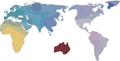 Genetic_distance
 -
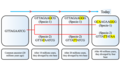 Genetic_distance
 -
 Genetic_distance
 -
 Genetic_distance
 -
 Genetic_distance
 -
 Genetic_distance


.png)
