Lomevactone: Difference between revisions
CSV import |
CSV import |
||
| Line 29: | Line 29: | ||
{{Pharma-stub}} | {{Pharma-stub}} | ||
{{Medicine-stub}} | {{Medicine-stub}} | ||
<gallery> | |||
File:Lomevactone.png|Lomevactone | |||
File:Lomevactone.svg|Lomevactone | |||
File:Lomevactone_synthesis.svg|Lomevactone synthesis | |||
</gallery> | |||
Latest revision as of 01:39, 18 February 2025
Lomevactone is a pharmacological agent that was previously used in the treatment of schizophrenia. It belongs to the class of antipsychotic drugs, specifically the butyrophenone class. Lomevactone is not commonly used today due to the development of newer antipsychotic medications with fewer side effects.
History[edit]
Lomevactone was first synthesized in the mid-20th century as part of a wave of new antipsychotic drugs. These drugs were developed in response to the need for more effective treatments for schizophrenia and other psychotic disorders. Lomevactone was one of several butyrophenones developed during this time, along with haloperidol and droperidol.
Pharmacology[edit]
As a butyrophenone, lomevactone works by blocking dopamine receptors in the brain. Dopamine is a neurotransmitter that plays a key role in mood, motivation, and reward. By blocking these receptors, lomevactone can help to reduce the symptoms of schizophrenia, such as hallucinations, delusions, and disorganized thinking.
Side Effects[edit]
Like many antipsychotic drugs, lomevactone can cause a range of side effects. These can include drowsiness, dizziness, and dry mouth. More serious side effects can include tardive dyskinesia, a condition characterized by involuntary movements, particularly of the face.
Current Use[edit]
Today, lomevactone is rarely used in clinical practice. This is due to the development of newer antipsychotic drugs that are generally more effective and have fewer side effects. However, it may still be used in some cases where other treatments have not been effective.
See Also[edit]


-
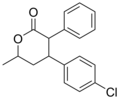 Lomevactone
 -
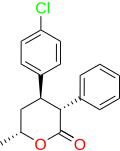 Lomevactone
 -
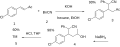 Lomevactone synthesis


