Vas-occlusive contraception: Difference between revisions
From WikiMD's Medical Encyclopedia
CSV import |
CSV import Tags: mobile edit mobile web edit |
||
| (One intermediate revision by the same user not shown) | |||
| Line 1: | Line 1: | ||
== Vas-occlusive contraception == | |||
[[File:Vas-occlusive Contraception Diagram.svg|thumb|Diagram illustrating vas-occlusive contraception]] | |||
'''Vas-occlusive contraception''' refers to a method of [[male contraception]] that involves blocking the [[vas deferens]] to prevent [[sperm]] from being included in the [[ejaculate]]. This method is an alternative to [[vasectomy]], which involves cutting and sealing the vas deferens. | |||
== | == Methods == | ||
There are several techniques for achieving vas-occlusion: | |||
* '''Reversible Inhibition of Sperm Under Guidance (RISUG):''' This method involves injecting a polymer gel into the vas deferens, which coats the walls and blocks sperm passage. It is designed to be reversible by flushing the gel out with another injection. | |||
* | |||
* '''Vasalgel:''' Similar to RISUG, Vasalgel is a polymer gel injected into the vas deferens. It is currently under development and testing in various countries. | |||
{{ | * '''Intravas Device (IVD):''' This involves inserting a plug or device into the vas deferens to block sperm. The device can be removed if fertility is desired. | ||
== Advantages == | |||
Vas-occlusive methods offer several potential advantages over traditional vasectomy: | |||
* '''Reversibility:''' Many vas-occlusive methods are designed to be reversible, allowing men to restore their fertility if desired. | |||
* '''Non-surgical:''' Some methods do not require surgery, reducing the risk of complications and recovery time. | |||
* '''Long-term:''' These methods provide long-term contraception without the need for regular intervention. | |||
== Challenges == | |||
Despite their potential, vas-occlusive methods face several challenges: | |||
* '''Research and Development:''' Many of these methods are still in experimental stages and require further research to confirm their safety and efficacy. | |||
* '''Regulatory Approval:''' Obtaining approval from health authorities can be a lengthy process. | |||
* '''Public Awareness:''' Increasing awareness and acceptance of these methods is necessary for widespread adoption. | |||
== Related pages == | |||
* [[Vasectomy]] | |||
* [[Male contraception]] | |||
* [[Contraceptive methods]] | |||
== References == | |||
{{Reflist}} | |||
[[Category:Contraception]] | |||
[[Category:Male reproductive system]] | |||
<gallery> | |||
File:Vas-occlusive_Contraception_Diagram.svg|Diagram of vas-occlusive contraception | |||
</gallery> | |||
Latest revision as of 22:08, 16 February 2025
Vas-occlusive contraception[edit]

Vas-occlusive contraception refers to a method of male contraception that involves blocking the vas deferens to prevent sperm from being included in the ejaculate. This method is an alternative to vasectomy, which involves cutting and sealing the vas deferens.
Methods[edit]
There are several techniques for achieving vas-occlusion:
- Reversible Inhibition of Sperm Under Guidance (RISUG): This method involves injecting a polymer gel into the vas deferens, which coats the walls and blocks sperm passage. It is designed to be reversible by flushing the gel out with another injection.
- Vasalgel: Similar to RISUG, Vasalgel is a polymer gel injected into the vas deferens. It is currently under development and testing in various countries.
- Intravas Device (IVD): This involves inserting a plug or device into the vas deferens to block sperm. The device can be removed if fertility is desired.
Advantages[edit]
Vas-occlusive methods offer several potential advantages over traditional vasectomy:
- Reversibility: Many vas-occlusive methods are designed to be reversible, allowing men to restore their fertility if desired.
- Non-surgical: Some methods do not require surgery, reducing the risk of complications and recovery time.
- Long-term: These methods provide long-term contraception without the need for regular intervention.
Challenges[edit]
Despite their potential, vas-occlusive methods face several challenges:
- Research and Development: Many of these methods are still in experimental stages and require further research to confirm their safety and efficacy.
- Regulatory Approval: Obtaining approval from health authorities can be a lengthy process.
- Public Awareness: Increasing awareness and acceptance of these methods is necessary for widespread adoption.
Related pages[edit]
References[edit]
-
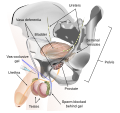 Diagram of vas-occlusive contraception
