Morning glory: Difference between revisions
CSV import Tags: mobile edit mobile web edit |
CSV import |
||
| Line 36: | Line 36: | ||
{{stub}} | {{stub}} | ||
{{dictionary-stub1}} | {{dictionary-stub1}} | ||
<gallery> | |||
File:Morning-glory-C6295b.jpg|Morning-glory-C6295b | |||
File:Morning_Glory_Photo.jpg|Morning Glory Photo | |||
File:Glorious_Morning_Glories.JPG|Glorious Morning Glories | |||
File:Morningglory-1.jpg|Morningglory-1 | |||
File:MorningGlories-Tonsofem.jpg|MorningGlories-Tonsofem | |||
File:Morninggloryseeds3d.jpg|Morninggloryseeds3d | |||
File:Morning_Glory-1.jpg|Morning Glory-1 | |||
File:Blue2glories.jpg|Blue2glories | |||
File:Ipomoea_purpurea_2400px.jpg|Ipomoea purpurea 2400px | |||
File:Pink_Morning_Glory_2500px.jpg|Pink Morning Glory 2500px | |||
File:Morning_Glory_Curled_Side_1800px.jpg|Morning Glory Curled Side 1800px | |||
File:Morning_Glory_Curled_Top_2250px.jpg|Morning Glory Curled Top 2250px | |||
</gallery> | |||
Latest revision as of 21:25, 23 February 2025
Morning Glory is a common name for over 1,000 species of flowering plants in the family Convolvulaceae, whose current taxonomy and systematics are in flux. Morning glory species belong to many genera, some of which are:
Description[edit]
Morning glories are annual or perennial herbs or shrubs, usually with hairy or indumented twining stems. The leaves are alternate and large, with lobed or entire margins. The flowers are trumpet-shaped, predominantly blue to purple or white, and may be solitary or clustered.
Cultivation and uses[edit]
Many morning glory species are cultivated for their attractive flowers. Some species, such as Ipomoea tricolor, have been used in traditional medicine and in shamanistic rituals.
Invasive species[edit]
Some species of morning glories, such as Ipomoea aquatica, are considered invasive species in certain parts of the world, where they can outcompete native plants and disrupt ecosystems.
Toxicity[edit]
Some morning glory plants contain toxic compounds such as ergoline alkaloids, which can be harmful if ingested.
See also[edit]
 | |
|---|---|
 |
 |
-
 Morning-glory-C6295b
 -
 Morning Glory Photo
 -
 Glorious Morning Glories
 -
 Morningglory-1
 -
 MorningGlories-Tonsofem
 -
 Morninggloryseeds3d
 -
 Morning Glory-1
 -
 Blue2glories
 -
 Ipomoea purpurea 2400px
 -
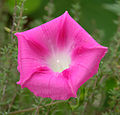 Pink Morning Glory 2500px
 -
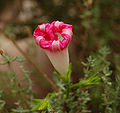 Morning Glory Curled Side 1800px
 -
 Morning Glory Curled Top 2250px


_in_Chitral.jpg)


