Labored breathing: Difference between revisions
CSV import Tags: Manual revert mobile edit mobile web edit |
CSV import |
||
| (2 intermediate revisions by the same user not shown) | |||
| Line 1: | Line 1: | ||
{{DISPLAYTITLE:Labored Breathing}} | |||
Labored breathing, also known as [[dyspnea]], is a condition characterized by difficult or uncomfortable breathing. It is a common symptom in various medical conditions and can range from mild to severe. Labored breathing often involves the use of accessory muscles of respiration and may be accompanied by other signs such as [[tachypnea]] (rapid breathing) and [[cyanosis]] (bluish discoloration of the skin due to lack of oxygen). | |||
==Causes== | == Causes == | ||
Labored breathing can be caused by a variety of | Labored breathing can be caused by a variety of factors, including: | ||
* [[ | * [[Respiratory diseases]] such as [[asthma]], [[chronic obstructive pulmonary disease]] (COPD), and [[pneumonia]]. | ||
* [[ | * [[Cardiac conditions]] like [[congestive heart failure]] and [[myocardial infarction]]. | ||
* [[Obstruction]] of the airway due to foreign bodies, [[tumors]], or [[anaphylaxis]]. | |||
* [[Neuromuscular disorders]] that affect the muscles involved in breathing. | |||
* [[ | * [[Metabolic acidosis]] and other metabolic disturbances. | ||
* [[ | |||
* [[ | |||
== | == Clinical Presentation == | ||
Patients with labored breathing may present with: | |||
* | * [[Sternal retractions]], where the skin between the ribs and around the neck sinks in during inhalation. | ||
* | * Use of accessory muscles, such as the [[sternocleidomastoid]] and [[scalene muscles]], to aid in breathing. | ||
* | * [[Nasal flaring]], especially in children. | ||
* | * Audible wheezing or stridor. | ||
* | * [[Orthopnea]], or difficulty breathing when lying flat. | ||
==Diagnosis== | == Diagnosis == | ||
The diagnosis of labored breathing | The diagnosis of labored breathing involves a thorough [[medical history]] and [[physical examination]]. Diagnostic tests may include: | ||
* [[Chest X-ray]] | * [[Chest X-ray]] to assess for lung pathology. | ||
* [[Pulmonary function tests]] | * [[Pulmonary function tests]] to evaluate lung capacity and airflow. | ||
* [[ | * [[Arterial blood gas]] analysis to measure oxygen and carbon dioxide levels in the blood. | ||
* [[Electrocardiogram]] (ECG) | * [[Electrocardiogram]] (ECG) to rule out cardiac causes. | ||
== | == Management == | ||
The | The management of labored breathing depends on the underlying cause. General measures include: | ||
* | * Providing supplemental [[oxygen therapy]] to improve oxygenation. | ||
* | * Administering [[bronchodilators]] for conditions like asthma and COPD. | ||
* | * Using [[diuretics]] in cases of heart failure to reduce fluid overload. | ||
* Ensuring a patent airway in cases of obstruction. | |||
* | |||
== | == Prognosis == | ||
The prognosis of labored breathing varies depending on the cause and severity of the condition. Early recognition and treatment are crucial to prevent complications and improve outcomes. | |||
== Related Pages == | |||
* [[Respiratory system]] | * [[Respiratory system]] | ||
* [[ | * [[Pulmonary disease]] | ||
* [[ | * [[Cardiovascular system]] | ||
* [[Emergency medicine]] | |||
[[Category:Respiratory diseases]] | [[Category:Respiratory diseases]] | ||
== Labored_breathing == | |||
<gallery> | |||
File:Sternal_retractions.JPG|Sternal retractions | |||
</gallery> | |||
Latest revision as of 21:23, 20 February 2025
Labored breathing, also known as dyspnea, is a condition characterized by difficult or uncomfortable breathing. It is a common symptom in various medical conditions and can range from mild to severe. Labored breathing often involves the use of accessory muscles of respiration and may be accompanied by other signs such as tachypnea (rapid breathing) and cyanosis (bluish discoloration of the skin due to lack of oxygen).
Causes[edit]
Labored breathing can be caused by a variety of factors, including:
- Respiratory diseases such as asthma, chronic obstructive pulmonary disease (COPD), and pneumonia.
- Cardiac conditions like congestive heart failure and myocardial infarction.
- Obstruction of the airway due to foreign bodies, tumors, or anaphylaxis.
- Neuromuscular disorders that affect the muscles involved in breathing.
- Metabolic acidosis and other metabolic disturbances.
Clinical Presentation[edit]
Patients with labored breathing may present with:
- Sternal retractions, where the skin between the ribs and around the neck sinks in during inhalation.
- Use of accessory muscles, such as the sternocleidomastoid and scalene muscles, to aid in breathing.
- Nasal flaring, especially in children.
- Audible wheezing or stridor.
- Orthopnea, or difficulty breathing when lying flat.
Diagnosis[edit]
The diagnosis of labored breathing involves a thorough medical history and physical examination. Diagnostic tests may include:
- Chest X-ray to assess for lung pathology.
- Pulmonary function tests to evaluate lung capacity and airflow.
- Arterial blood gas analysis to measure oxygen and carbon dioxide levels in the blood.
- Electrocardiogram (ECG) to rule out cardiac causes.
Management[edit]
The management of labored breathing depends on the underlying cause. General measures include:
- Providing supplemental oxygen therapy to improve oxygenation.
- Administering bronchodilators for conditions like asthma and COPD.
- Using diuretics in cases of heart failure to reduce fluid overload.
- Ensuring a patent airway in cases of obstruction.
Prognosis[edit]
The prognosis of labored breathing varies depending on the cause and severity of the condition. Early recognition and treatment are crucial to prevent complications and improve outcomes.
Related Pages[edit]
Labored_breathing[edit]
-
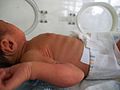 Sternal retractions

