Acute myeloid leukemia: Difference between revisions
No edit summary Tag: visualeditor-wikitext |
CSV import |
||
| (One intermediate revision by the same user not shown) | |||
| Line 1: | Line 1: | ||
{{Infobox medical condition | |||
| name = Acute Myeloid Leukemia | |||
| synonyms = Acute myelogenous leukemia, acute nonlymphocytic leukemia | |||
| image = | |||
| caption = | |||
| pronounce = | |||
| specialty = [[Oncology]], [[Hematology]] | |||
| symptoms = Fatigue, fever, increased risk of infection, bleeding | |||
| complications = [[Anemia]], infection, bleeding, spread to other parts of the body | |||
| onset = Rapid | |||
| duration = | |||
| types = M0–M7 (based on the French-American-British (FAB) classification) | |||
| causes = Genetic mutations, exposure to radiation, previous chemotherapy, smoking | |||
| risks = Age, smoking, previous chemotherapy, genetic disorders | |||
| diagnosis = Blood tests, bone marrow examination | |||
| differential = [[Acute lymphoblastic leukemia]], [[Myelodysplastic syndrome]], [[Aplastic anemia]] | |||
| prevention = | |||
| treatment = Chemotherapy, [[Bone marrow transplantation]], targeted therapy | |||
| medication = Cytarabine, anthracyclines | |||
| prognosis = Variable; depends on subtype, age, and genetics | |||
| frequency = | |||
| deaths = | |||
}} | |||
'''Acute myeloid leukemia''' ( | '''Acute myeloid leukemia''' ('''AML''') is a type of [[cancer]] that affects the blood and bone marrow. AML is characterized by the rapid growth of abnormal white blood cells that accumulate in the bone marrow and interfere with the production of normal blood cells. It is the most common type of acute leukemia in adults. | ||
== Signs and Symptoms == | |||
The symptoms of AML are caused by the replacement of normal bone marrow with leukemic cells, which leads to a drop in red blood cells, platelets, and normal white blood cells. Common symptoms include: | |||
* Fatigue | |||
* Fever | |||
* Increased risk of infections | |||
* Bleeding and bruising easily | |||
* Shortness of breath | |||
* Pale skin | |||
== | == Causes == | ||
The exact cause of AML is not known, but several risk factors have been identified: | |||
* Genetic mutations | |||
* Exposure to radiation | |||
* Previous chemotherapy treatment | |||
* Smoking | |||
== Pathophysiology == | |||
AML involves mutations in the DNA of a cell in the bone marrow. These mutations cause the cell to grow and divide uncontrollably. The accumulation of these abnormal cells, or blasts, in the bone marrow inhibits the ability to produce normal blood cells. | |||
== | == Diagnosis == | ||
Diagnosis of AML typically involves: | |||
* Complete blood count (CBC) | |||
* Bone marrow biopsy | |||
* Cytogenetic analysis | |||
* Molecular genetic testing | |||
== Treatment == | |||
Treatment for AML can vary based on the characteristics of the leukemia and the overall health of the patient. Common treatments include: | |||
* [[Chemotherapy]] | |||
* [[Bone marrow transplantation]] | |||
* Targeted therapy | |||
== | == Prognosis == | ||
The prognosis for AML varies widely depending on several factors, including the subtype of AML, the patient's age, and the genetic abnormalities of the leukemia cells. Some subtypes have a relatively good prognosis, while others are more challenging to treat. | |||
The | |||
== | == Epidemiology == | ||
AML is more common in adults than in children and is slightly more prevalent in men than in women. The incidence increases with age. | |||
The | |||
* | == See Also == | ||
* [[Leukemia]] | |||
* [[Myeloproliferative neoplasm]] | |||
* [[Hematopoietic stem cell transplantation]] | |||
[[Category:Hematology]] | |||
[[Category:Oncology]] | |||
[[Category:Types of cancer]] | |||
{{medicine-stub}} | |||
== Acute myeloid leukemia == | |||
<gallery> | |||
File:Acute Myeloid Leukemia (M2 type).jpg|Acute Myeloid Leukemia (M2 type) | |||
File:AMLCase-66.jpg|AML Case 66 | |||
{{stub}} | File:Diagram showing the cells in which AML starts CRUK 297.svg|Diagram showing the cells in which AML starts | ||
File:Myeloblast with Auer rod smear 2010-01-27.JPG|Myeloblast with Auer rod smear | |||
File:Relative incidence of acute myeloid leukemia subtypes.png|Relative incidence of acute myeloid leukemia subtypes | |||
File:Survival curve by age at diagnosis - cancer seer gov - faststats.jpg|Survival curve by age at diagnosis | |||
File:9;11.rhyax.jpg|9;11 translocation | |||
File:Alfred Velpeau 01.JPG|Alfred Velpeau | |||
</gallery> | |||
Latest revision as of 00:36, 20 February 2025
| Acute Myeloid Leukemia | |
|---|---|
| Synonyms | Acute myelogenous leukemia, acute nonlymphocytic leukemia |
| Pronounce | |
| Specialty | Oncology, Hematology |
| Symptoms | Fatigue, fever, increased risk of infection, bleeding |
| Complications | Anemia, infection, bleeding, spread to other parts of the body |
| Onset | Rapid |
| Duration | |
| Types | M0–M7 (based on the French-American-British (FAB) classification) |
| Causes | Genetic mutations, exposure to radiation, previous chemotherapy, smoking |
| Risks | Age, smoking, previous chemotherapy, genetic disorders |
| Diagnosis | Blood tests, bone marrow examination |
| Differential diagnosis | Acute lymphoblastic leukemia, Myelodysplastic syndrome, Aplastic anemia |
| Prevention | |
| Treatment | Chemotherapy, Bone marrow transplantation, targeted therapy |
| Medication | Cytarabine, anthracyclines |
| Prognosis | Variable; depends on subtype, age, and genetics |
| Frequency | |
| Deaths | |
Acute myeloid leukemia (AML) is a type of cancer that affects the blood and bone marrow. AML is characterized by the rapid growth of abnormal white blood cells that accumulate in the bone marrow and interfere with the production of normal blood cells. It is the most common type of acute leukemia in adults.
Signs and Symptoms[edit]
The symptoms of AML are caused by the replacement of normal bone marrow with leukemic cells, which leads to a drop in red blood cells, platelets, and normal white blood cells. Common symptoms include:
- Fatigue
- Fever
- Increased risk of infections
- Bleeding and bruising easily
- Shortness of breath
- Pale skin
Causes[edit]
The exact cause of AML is not known, but several risk factors have been identified:
- Genetic mutations
- Exposure to radiation
- Previous chemotherapy treatment
- Smoking
Pathophysiology[edit]
AML involves mutations in the DNA of a cell in the bone marrow. These mutations cause the cell to grow and divide uncontrollably. The accumulation of these abnormal cells, or blasts, in the bone marrow inhibits the ability to produce normal blood cells.
Diagnosis[edit]
Diagnosis of AML typically involves:
- Complete blood count (CBC)
- Bone marrow biopsy
- Cytogenetic analysis
- Molecular genetic testing
Treatment[edit]
Treatment for AML can vary based on the characteristics of the leukemia and the overall health of the patient. Common treatments include:
- Chemotherapy
- Bone marrow transplantation
- Targeted therapy
Prognosis[edit]
The prognosis for AML varies widely depending on several factors, including the subtype of AML, the patient's age, and the genetic abnormalities of the leukemia cells. Some subtypes have a relatively good prognosis, while others are more challenging to treat.
Epidemiology[edit]
AML is more common in adults than in children and is slightly more prevalent in men than in women. The incidence increases with age.
See Also[edit]

Acute myeloid leukemia[edit]
-
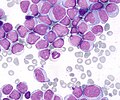 Acute Myeloid Leukemia (M2 type)
 -
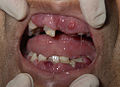 AML Case 66
 -
 Diagram showing the cells in which AML starts
 -
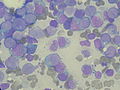 Myeloblast with Auer rod smear
 -
 Relative incidence of acute myeloid leukemia subtypes
 -
 Survival curve by age at diagnosis
 -
 9;11 translocation
 -
 Alfred Velpeau
.jpg)


