European Fishery MLS: Difference between revisions
CSV import |
CSV import |
||
| Line 20: | Line 20: | ||
[[Category:European Union law]] | [[Category:European Union law]] | ||
[[Category:Sustainable fishing]] | [[Category:Sustainable fishing]] | ||
== European_Fishery_MLS == | |||
<gallery> | |||
File:Gadus_morhua_Cod-2b-Atlanterhavsparken-Norway.JPG|Gadus morhua Cod | |||
File:Melanogrammus_aeglefinus.png|Melanogrammus aeglefinus | |||
File:Pollachius_virens.png|Pollachius virens | |||
File:Pollachius_pollachius_aquarium.jpg|Pollachius pollachius | |||
File:Merluccius_merluccius.jpg|Merluccius merluccius | |||
File:Lepidorhombus_whiffiagonis_4G.jpg|Lepidorhombus whiffiagonis | |||
File:Pegusa_lascaris.jpg|Pegusa lascaris | |||
File:Pleuronectes_platessa.jpg|Pleuronectes platessa | |||
</gallery> | |||
Latest revision as of 11:55, 25 February 2025

European Fishery Minimum Landing Sizes (MLS) are regulations set by the European Union (EU) to promote sustainable fishing practices. These rules specify the smallest size at which various species of fish and seafood can legally be caught and landed. The primary goal of MLS is to ensure that fish have the opportunity to reach maturity and reproduce before they are caught, helping to maintain healthy fish populations and marine ecosystems.
Overview[edit]
The concept of Minimum Landing Sizes is part of a broader set of measures under the Common Fisheries Policy (CFP) of the EU, which aims to protect marine environments and ensure the long-term viability of the fishing industry. By setting size limits, the policy seeks to prevent overfishing and the depletion of fish stocks, which are critical issues facing the global fishing industry.
Species Covered[edit]
MLS regulations cover a wide range of species, including but not limited to, cod, haddock, plaice, and lobster. Each species has a specific size limit, which can vary depending on the geographical area and the type of gear used for fishing. These regulations are periodically reviewed and updated based on scientific assessments of fish populations and their reproductive cycles.
Implementation and Enforcement[edit]
The enforcement of MLS is a responsibility shared between EU member states and the European Fisheries Control Agency (EFCA). National authorities are tasked with monitoring fishing activities within their waters, inspecting catches, and ensuring compliance with MLS and other fisheries regulations. Violations can result in fines, seizure of catches, and suspension of fishing licenses.
Challenges and Criticisms[edit]
While the intention behind MLS is to promote sustainability, the policy has faced criticism from some stakeholders. One of the main challenges is the issue of discards, where fish that are below the minimum size are thrown back into the sea, often with little chance of survival. This not only wastes resources but can also harm marine ecosystems. In response, the EU has introduced the Landing Obligation, which requires all catches of regulated species to be landed, regardless of size, to address this issue.
Future Directions[edit]
The EU continues to refine its approach to fisheries management, with a focus on science-based measures and stakeholder engagement. Advances in technology and data collection are expected to play a key role in improving the effectiveness of MLS and other conservation measures. Additionally, there is a growing emphasis on ecosystem-based management practices that consider the broader impacts of fishing on marine environments.
European_Fishery_MLS[edit]
-
 Gadus morhua Cod
 -
 Melanogrammus aeglefinus
 -
 Pollachius virens
 -
 Pollachius pollachius
 -
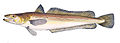 Merluccius merluccius
 -
 Lepidorhombus whiffiagonis
 -
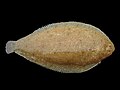 Pegusa lascaris
 -
 Pleuronectes platessa


