Saba (condiment): Difference between revisions
CSV import |
CSV import |
||
| Line 24: | Line 24: | ||
[[Category:Italian cuisine]] | [[Category:Italian cuisine]] | ||
{{food-stub}} | {{food-stub}} | ||
<gallery> | |||
File:saba_san_giacomo.JPG|Saba San Giacomo | |||
</gallery> | |||
Latest revision as of 11:23, 25 February 2025

Saba is a traditional condiment used in Italian cuisine, particularly in the regions of Emilia-Romagna, Marche, and Umbria. It is made from the must of grapes, which is the freshly crushed fruit juice that contains the skins, seeds, and stems. The must is slowly cooked down to create a thick, sweet syrup. Saba is known for its rich, complex flavor, which can include notes of fig, raisin, and molasses, depending on the grapes used and the length of cooking.
History[edit]
The use of grape must in cooking dates back to ancient times, with evidence of its use in both the Roman Empire and in the cuisines of the Mediterranean. Saba, in particular, has a history that stretches back centuries in Italy, where it was traditionally used as a sweetener before the widespread availability of refined sugar.
Production[edit]
To produce saba, grape must is simmered over a low heat for several hours. This process concentrates the flavors and sugars in the must, resulting in a thick syrup. The type of grapes used, as well as the specific method of reduction, can vary by region and producer, leading to subtle differences in flavor and consistency.
Culinary Uses[edit]
Saba is versatile in the kitchen and can be used in both sweet and savory dishes. It is often drizzled over cheese, particularly aged hard cheeses, where its sweetness complements the salty flavors. It can also be used as a topping for desserts, such as panna cotta or ice cream, and is sometimes added to vinaigrettes and marinades to impart a sweet, fruity flavor. In addition, saba serves as the base for the production of balsamic vinegar, another prized Italian condiment.
Nutritional Information[edit]
As a concentrated form of grape must, saba is high in natural sugars and calories, but it also contains the vitamins and minerals found in grapes, including vitamin C, vitamin K, and potassium. However, because it is typically consumed in small quantities, its contribution to the daily diet is minimal.
Cultural Significance[edit]
In the regions where it is produced, saba is more than just a food product; it is a link to the past and a representation of local culinary traditions. Its production and use are often associated with harvest time and family gatherings, making it a culturally significant element of Italian cuisine.
See Also[edit]

-
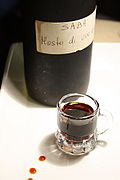 Saba San Giacomo
