Matzah: Difference between revisions
CSV import |
CSV import |
||
| Line 26: | Line 26: | ||
{{Judaism-stub}} | {{Judaism-stub}} | ||
<gallery> | |||
File:Machine-made Shmura Matzo.jpg|Machine-made Shmura Matzo | |||
File:Matzot René Neymann Wasselonne avril 2014.jpg|Matzot René Neymann Wasselonne | |||
File:Shmura Matzo.jpg|Shmura Matzo | |||
File:Matzah.jpg|Matzah | |||
File:Soft matzah.jpg|Soft matzah | |||
File:Matzo dough roller.jpg|Matzo dough roller | |||
File:Matzo-forming machine.jpg|Matzo-forming machine | |||
File:Matza9197.JPG|Matza | |||
File:Matsa yeyən uşaqlar - 1.jpg|Matsa yeyən uşaqlar | |||
File:Matzah balls.JPG|Matzah balls | |||
</gallery> | |||
Latest revision as of 01:34, 20 February 2025


Matzah (also spelled Matzo, Matza, or Matzoh) is an unleavened bread that is a key element in the Jewish observance of Passover. This flatbread is made simply from flour and water, and it is baked until it is crisp. The significance of matzah lies in its connection to the Exodus from Egypt, when the Israelites left in such haste that they could not wait for their bread to rise. As a result, matzah is eaten during the eight-day festival of Passover to commemorate this event and to fulfill the commandment to eat unleavened bread.
History and Significance[edit]
The history of matzah is deeply intertwined with the Jewish people's history and their liberation from slavery in ancient Egypt. According to the Torah, the Israelites had to leave Egypt so quickly that there was no time for their dough to rise. In memory of this, eating matzah during Passover serves as a reminder of the haste with which their ancestors left Egypt and the freedom they achieved.
Preparation and Types[edit]
Matzah is traditionally made from wheat, although it can also be made from other grains such as barley, spelt, rye, or oats, in accordance with Jewish dietary laws (Kashrut). The process of making matzah is carefully controlled to prevent fermentation, and the dough must be baked within 18 minutes after the flour is mixed with water, the time believed to be the threshold before natural leavening begins.
There are several types of matzah available:
- Shmurah Matzah: This is a special type of matzah where the wheat used is guarded from moisture from the time of harvest to ensure it does not ferment.
- Egg Matzah: Made with fruit juice or eggs in addition to water, this type is softer and has a different flavor but is not used to fulfill the commandment during the Passover Seder.
- Whole Wheat Matzah: Made from whole wheat flour, offering a healthier alternative.
- Gluten-Free Matzah: For those who cannot consume gluten, there are options made from gluten-free grains.
Cultural and Religious Practices[edit]
During Passover, it is a religious obligation for practicing Jews to eat matzah on the first night of the festival during the Seder, a ritual meal that includes reading the Haggadah, drinking four cups of wine, and eating symbolic foods. Matzah is also eaten throughout the eight days of Passover in place of leavened bread.
Matzah has also found its way into various Jewish dishes, such as Matzah Ball Soup and Matzah Brei, where it is used as a primary ingredient.
In Modern Times[edit]
Today, matzah is produced on a large scale by automated factories, although handmade varieties are still highly valued for religious purposes. The production and sale of matzah represent a significant aspect of Jewish cultural and religious life, especially during the Passover season.

-
 Machine-made Shmura Matzo
 -
 Matzot René Neymann Wasselonne
 -
 Shmura Matzo
 -
 Matzah
 -
 Soft matzah
 -
 Matzo dough roller
 -
 Matzo-forming machine
 -
 Matza
Matza -
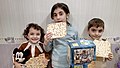 Matsa yeyən uşaqlar
 -
 Matzah balls


