Relay For Life: Difference between revisions
CSV import Tags: mobile edit mobile web edit |
CSV import |
||
| Line 23: | Line 23: | ||
{{medicine-stub}} | {{medicine-stub}} | ||
<gallery> | |||
File:American Cancer Society Relay For Life Logo.png|Relay For Life | |||
File:Relay for life luminaries "hope!" 2007.jpg|Relay For Life | |||
File:Relay-for-life-survivors-lap.jpg|Relay For Life | |||
File:Relay-for-life-luminaria.jpg|Relay For Life | |||
</gallery> | |||
Latest revision as of 00:49, 20 February 2025
Relay For Life is a community-based fundraising event for the American Cancer Society and other Cancer-related institutions. Each year, more than 5,000 Relay For Life events take place in over twenty countries.
History[edit]
Relay For Life began in the United States in May 1985 when colorectal surgeon Dr. Gordy Klatt walked and ran for 24 hours around a track in Tacoma, Washington, ultimately raising $27,000 to help the American Cancer Society fight the nation’s biggest health concern – cancer. A year later, 340 supporters joined the overnight event. Since then, the Relay For Life movement has grown into a worldwide phenomenon, raising nearly $5 billion to fight cancer.
Event Structure[edit]
Relay For Life events are typically 24 hours in length, though some events may last up to 48 hours. Participants, often organized into teams, take turns walking or running around a track. The event is designed to maintain a continuous presence on the track throughout the duration of the event, in recognition of the fact that cancer never sleeps.
Luminaria Ceremony[edit]
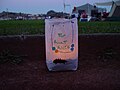
One of the key moments of a Relay For Life event is the Luminaria Ceremony. During this ceremony, participants light luminaria bags in memory of those who have lost their lives to cancer, in support of those currently battling cancer, and in honor of those who have successfully overcome cancer. The luminaria bags are then placed around the track, and participants often walk a lap in silence.
Fundraising[edit]
Funds raised through Relay For Life events are used to fund cancer research, patient care services, education and prevention initiatives. In addition to the funds raised through team fundraising and individual donations, many Relay For Life events also include a silent auction or other fundraising activities.
See Also[edit]

-
Relay For Life
-
 Relay For Life
 -
 Relay For Life
 -
 Relay For Life


