Warsaw concentration camp: Difference between revisions
CSV import |
CSV import Tags: mobile edit mobile web edit |
||
| Line 19: | Line 19: | ||
[[Category:Holocaust locations in Poland]] | [[Category:Holocaust locations in Poland]] | ||
{{Holocaust-stub}} | {{Holocaust-stub}} | ||
<gallery> | |||
File:Gęsiowka_Prison_in_Warsaw_(1944).jpg|Warsaw_concentration_camp | |||
File:Stroop_Report_-_Warsaw_Ghetto_Uprising_02.jpg|Warsaw_concentration_camp | |||
File:Oswald_Pohl_KL_Warschau_1943.jpg|Warsaw_concentration_camp | |||
File:Warsaw_Ghetto.png|Warsaw_concentration_camp | |||
File:Aerial_photograph_of_the_destroyed_Warsaw_Ghetto.jpg|Warsaw_concentration_camp | |||
File:KL_Warschau_crematorium.jpg|Warsaw_concentration_camp | |||
File:Warsaw_Uprising_-_Gęsiówka_-_3.jpg|Warsaw_concentration_camp | |||
File:Friedrich_Ruppert.jpg|Warsaw_concentration_camp | |||
File:KL_Warschau_-_multilingual_warning_sign.jpg|Warsaw_concentration_camp | |||
File:Warsaw_ghetto_ruins_–_place_of_mass_executions_at_27_Dzielna_Street.jpg|Warsaw_concentration_camp | |||
File:Gesiowka.jpg|Warsaw_concentration_camp | |||
File:Jewish_prisones_of_KZGesiowka_liberated_by_Polish_Soldiers_of_Home_Army_Warsaw1944.jpg|Warsaw_concentration_camp | |||
</gallery> | |||
Latest revision as of 12:13, 18 February 2025
Warsaw concentration camp, also known as KL Warschau, was a complex of various concentration camps and extermination camps operated by Nazi Germany during World War II in occupied Poland. It played a significant role in the implementation of the Holocaust and the extermination of the Polish and Jewish populations in the region. The camp's history is a stark reminder of the atrocities committed during the war and serves as an important subject of study in understanding the depths of human cruelty.
History[edit]
The Warsaw concentration camp was established by Nazi Germany following their invasion and subsequent occupation of Poland in 1939. The camp was part of a larger network of camps that were set up throughout occupied Poland and Europe, aimed at detaining, exploiting, and exterminating Jews, Poles, and other groups considered undesirable by the Nazi regime.
Structure[edit]
The camp was divided into several sections, each serving a different purpose. Some parts of the camp were used for forced labor, where prisoners were subjected to inhumane working conditions and often worked to death. Other sections were used for the systematic extermination of prisoners through mass shootings, hangings, and the use of gas chambers.
Life in the Camp[edit]
Life in the Warsaw concentration camp was brutal and characterized by constant abuse, starvation, disease, and the ever-present threat of death. Prisoners were deprived of basic human needs and rights and were subjected to cruel experiments, forced labor, and execution without trial.
Liberation[edit]
The camp was eventually liberated by the Allied forces towards the end of World War II. However, the liberation did not come soon enough to save the hundreds of thousands of people who died in the camp due to the inhumane conditions and the systematic extermination policies of the Nazi regime.
Legacy[edit]
Today, the Warsaw concentration camp serves as a somber reminder of the atrocities of World War II. Memorials and museums have been established at the site of the camp and in other locations to honor the memory of those who suffered and died. The camp's history is also an important part of Holocaust education, serving to remind future generations of the dangers of hatred, bigotry, and totalitarianism.

-
 Warsaw_concentration_camp
 -
 Warsaw_concentration_camp
 -
 Warsaw_concentration_camp
 -
 Warsaw_concentration_camp
 -
 Warsaw_concentration_camp
 -
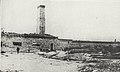 Warsaw_concentration_camp
 -
 Warsaw_concentration_camp
 -
 Warsaw_concentration_camp
 -
 Warsaw_concentration_camp
 -
 Warsaw_concentration_camp
 -
 Warsaw_concentration_camp
 -
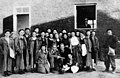 Warsaw_concentration_camp
.jpg)


