Philosophy of mind: Difference between revisions
CSV import |
CSV import |
||
| Line 32: | Line 32: | ||
{{Philosophy-stub}} | {{Philosophy-stub}} | ||
<gallery> | |||
File:Descartes_mind_and_body.gif|Descartes' mind and body | |||
File:Frans_Hals_-_Portret_van_René_Descartes.jpg|Portrait of René Descartes by Frans Hals | |||
File:DualismCausationViews3.svg|Dualism causation views | |||
File:Anomalous_Monism.png|Anomalous Monism | |||
File:John_Searle_2002.jpg|John Searle in 2002 | |||
File:Phrenology1.jpg|Phrenology | |||
File:Functional_magnetic_resonance_imaging.jpg|Functional magnetic resonance imaging | |||
</gallery> | |||
Latest revision as of 11:11, 18 February 2025
Philosophy of mind is a branch of philosophy that studies the nature of the mind, mental events, mental functions, consciousness, and their relationship to the physical body, notably the brain. The mind-body problem, which encompasses the relationship between mind and matter, is a central issue in the philosophy of mind, with a rich history dating back to pre-Socratic times.
Overview[edit]
The philosophy of mind is concerned with fundamental questions about the nature of mind and mental states, and how they interact with the physical world. One of the key debates in this field is between dualism and physicalism. Dualism posits that the mind and body are fundamentally different in nature, typically arguing that the mind is non-physical. In contrast, physicalism asserts that mental states are ultimately physical in nature.
Key Concepts[edit]
Dualism[edit]
Dualism is the view that the mind and the physical world are fundamentally different kinds of things. René Descartes is one of the most prominent advocates of dualism, arguing for a strict separation between mind (res cogitans) and matter (res extensa).
Physicalism[edit]
Physicalism, on the other hand, argues that everything that exists is physical, and thus, mental processes can be explained in terms of physical processes in the brain. This view is supported by developments in neuroscience and psychology, which increasingly show correlations between brain activity and mental states.
Consciousness[edit]
Consciousness is perhaps the most perplexing aspect of the mind, with debates focusing on its nature, origins, and whether it can be fully explained by physical processes. The hard problem of consciousness, a term coined by David Chalmers, refers to the difficulty of explaining why and how we have qualia or subjective experiences.
Intentionality[edit]
Intentionality is the capacity of the mind to be about, to represent, or to stand for, things, properties, or states of affairs. The concept of intentionality is central to understanding mental states' directedness towards an object or state of affairs.
Free Will[edit]
The question of free will involves whether individuals have control over their actions. This issue intersects with the philosophy of mind through the exploration of how mental states influence actions and whether deterministic or indeterministic views of the universe impact the concept of free will.
Mind-Body Problem[edit]
The mind-body problem is a central issue in the philosophy of mind, questioning how mental states, which are subjective and qualitative, can relate to the physical body and brain, which are objective and quantitative. Various solutions have been proposed, ranging from dualistic interactions to physicalist explanations.
Contemporary Approaches[edit]
Contemporary philosophy of mind includes various approaches, such as functionalism, which conceptualizes mental states in terms of their functional roles rather than their internal constitution. Other notable approaches include identity theory, panpsychism, and emergentism.
Conclusion[edit]
The philosophy of mind remains a vibrant field of inquiry, with ongoing debates about the nature of mind, consciousness, and their relation to the physical world. As scientific understanding of the brain advances, new insights are expected to contribute to these longstanding philosophical discussions.

This article is a philosophy-related stub. You can help WikiMD by expanding it!
-
 Descartes' mind and body
 -
 Portrait of René Descartes by Frans Hals
 -
 Dualism causation views
 -
 Anomalous Monism
 -
 John Searle in 2002
 -
 Phrenology
 -
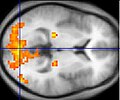 Functional magnetic resonance imaging


