External anal sphincter: Difference between revisions
CSV import Tags: mobile edit mobile web edit |
CSV import |
||
| Line 25: | Line 25: | ||
{{Medicine-stub}} | {{Medicine-stub}} | ||
<gallery> | |||
File:Illu_intestine.jpg|External anal sphincter | |||
File:Human_anus-en.svg|Diagram of the human anus | |||
File:1116_Muscle_of_the_Male_Perineum.png|Muscles of the male perineum | |||
File:1116_Muscle_of_the_Female_Perineum.png|Muscles of the female perineum | |||
File:Gray1156.png|Anatomy of the anal sphincter | |||
</gallery> | |||
Latest revision as of 04:37, 18 February 2025
External Anal Sphincter
The External Anal Sphincter (EAS) is a significant structure in the human body, playing a crucial role in the anal continence mechanism. It is a skeletal muscle that encircles the anus, allowing for voluntary control over defecation. Understanding the anatomy, function, and clinical significance of the EAS is essential for medical professionals and those studying the gastrointestinal and pelvic floor systems.
Anatomy[edit]
The External Anal Sphincter is composed of striated muscle fibers and is divided anatomically into three parts: the subcutaneous, superficial, and deep parts. It surrounds the Internal Anal Sphincter (IAS), which is made of smooth muscle and provides involuntary control. The EAS extends from the anococcygeal ligament anteriorly to the perineal body, contributing to the overall structure and function of the pelvic floor.
Function[edit]
The primary function of the External Anal Sphincter is to maintain fecal continence. It works in conjunction with the Internal Anal Sphincter and the puborectalis muscle of the levator ani to form a tight seal around the anal canal. Voluntary contraction of the EAS stops the passage of feces, while relaxation allows for defecation. This muscle is also involved in voluntary actions such as coughing and sneezing, where increased intra-abdominal pressure is counteracted to prevent involuntary defecation.
Clinical Significance[edit]
Damage or dysfunction of the External Anal Sphincter can lead to conditions such as fecal incontinence or anal fissures. Causes of EAS dysfunction may include childbirth trauma, surgical injury, or neurological disorders. Diagnosis of EAS issues often involves anorectal manometry, endosonography, or magnetic resonance imaging (MRI) to assess the structure and function of the pelvic floor muscles.
Treatment options vary depending on the underlying cause of dysfunction but may include pelvic floor physical therapy, surgical repair, or management of symptoms through lifestyle modifications and medications.
Surgical Considerations[edit]
Surgical interventions for EAS dysfunction, such as sphincter repair or sphincteroplasty, are considered when conservative treatments fail. These procedures aim to restore the structural integrity and function of the sphincter, improving continence and quality of life for affected individuals.
Conclusion[edit]
The External Anal Sphincter is a vital component of the anal continence mechanism. Its proper function is essential for maintaining fecal continence, and its dysfunction can significantly impact an individual's quality of life. Advances in diagnostic and treatment modalities continue to improve outcomes for patients with EAS-related conditions.

-
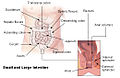 External anal sphincter
 -
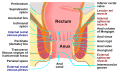 Diagram of the human anus
 -
 Muscles of the male perineum
 -
 Muscles of the female perineum
 -
 Anatomy of the anal sphincter


