Aragh Sagi: Difference between revisions
CSV import |
CSV import |
||
| Line 45: | Line 45: | ||
[[Category:Flora of Australia]] | [[Category:Flora of Australia]] | ||
[[Category:Edible fruits]] | [[Category:Edible fruits]] | ||
<gallery> | |||
File:Aragh_sagi.jpg|Aragh Sagi | |||
File:Premium_Arak_Saggi.jpg|Premium Arak Saggi | |||
</gallery> | |||
Latest revision as of 02:09, 17 February 2025
Species of plant
Antidesma bunius, commonly known as bignay, is a species of fruit-bearing tree in the family Phyllanthaceae. It is native to Southeast Asia and northern Australia, and is cultivated for its edible fruit.
Description[edit]
Antidesma bunius is a small to medium-sized tree that can grow up to 30 meters in height. The leaves are simple, alternate, and oblong, with a glossy green appearance. The tree produces small, round fruits that are initially green, turning red and then black as they ripen. The fruits are borne in clusters and are known for their tart flavor.
Distribution and Habitat[edit]
Antidesma bunius is found in tropical regions of Southeast Asia, including the Philippines, Indonesia, and Malaysia, as well as in northern Australia. It thrives in a variety of habitats, from lowland forests to mountainous regions, and is often found in secondary forests and disturbed areas.
Uses[edit]
The fruits of Antidesma bunius are edible and are often used in the preparation of jams, jellies, and wines. The fruit is rich in antioxidants and vitamins, making it a popular choice for health-conscious consumers. In the Philippines, the fruit is commonly used to make a local wine known as bugnay wine.
Cultivation[edit]
Antidesma bunius is cultivated for its fruit in many parts of Southeast Asia. The tree is relatively easy to grow and can be propagated from seeds or cuttings. It prefers well-drained soil and a sunny location, although it can tolerate partial shade.
Gallery[edit]
-
 Ripe bignay fruit
 -
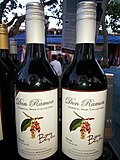 Bugnay wine made from Antidesma bunius


Related pages[edit]
-
 Aragh Sagi
 -
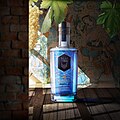 Premium Arak Saggi


