Allium tuberosum
Allium tuberosum, commonly known as garlic chives, is a perennial plant species in the family Amaryllidaceae. It is native to the Chinese province of Shanxi and cultivated widely across Asia for its culinary and medicinal uses.
Description[edit]
Allium tuberosum is a herbaceous perennial plant growing from a small, elongated bulb. The plant typically reaches a height of 30 to 50 cm. The leaves are flat, narrow, and linear, resembling those of common chives but with a distinct garlic aroma. The flowers are white, star-shaped, and arranged in a loose umbel at the top of a leafless stalk. Flowering occurs in late summer to early autumn.
Cultivation[edit]
Garlic chives are hardy plants that thrive in well-drained soil with full sun exposure. They are often grown in herb gardens and can be propagated by seed or by dividing the clumps. Regular watering and occasional fertilization promote healthy growth. The plant is known for its ability to repel pests, making it a beneficial companion plant in vegetable gardens.
Culinary Uses[edit]
Garlic chives are widely used in Asian cuisine. The leaves, flowers, and stalks are all edible and impart a mild garlic flavor to dishes. They are commonly used in stir-fries, dumplings, and soups. In Chinese cuisine, garlic chives are a key ingredient in dishes such as jiaozi (dumplings) and chive pancakes.
Medicinal Uses[edit]
In traditional Chinese medicine, Allium tuberosum is believed to have various health benefits. It is used to treat digestive issues, boost the immune system, and improve circulation. The plant is also thought to have antibacterial and anti-inflammatory properties.
Related Species[edit]
Allium tuberosum is closely related to other species in the Allium genus, such as Allium schoenoprasum (common chives) and Allium sativum (garlic). These species share similar growth habits and culinary uses.
Gallery[edit]
-
 Allium tuberosum
 -
 Allium tuberosum
 -
 Allium tuberosum
 -
 Allium tuberosum
 -
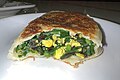 Allium tuberosum
 -
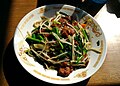 Allium tuberosum
 -
 Allium tuberosum
 -
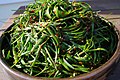 Allium tuberosum
 -
 Allium tuberosum
 -
 Allium tuberosum
 -
 Allium tuberosum
 -
 Allium tuberosum


-cropped.jpg)
.jpg)

.jpg)


_deulkkae_(Perilla_frutescens)_buchu_(Allium_tuberosum).jpg)


Related Pages[edit]
Medical Disclaimer: WikiMD is for informational purposes only and is not a substitute for professional medical advice. Content may be inaccurate or outdated and should not be used for diagnosis or treatment. Always consult your healthcare provider for medical decisions. Verify information with trusted sources such as CDC.gov and NIH.gov. By using this site, you agree that WikiMD is not liable for any outcomes related to its content. See full disclaimer.
Credits:Most images are courtesy of Wikimedia commons, and templates, categories Wikipedia, licensed under CC BY SA or similar.
Translate this page: - East Asian
中文,
日本,
한국어,
South Asian
हिन्दी,
தமிழ்,
తెలుగు,
Urdu,
ಕನ್ನಡ,
Southeast Asian
Indonesian,
Vietnamese,
Thai,
မြန်မာဘာသာ,
বাংলা
European
español,
Deutsch,
français,
Greek,
português do Brasil,
polski,
română,
русский,
Nederlands,
norsk,
svenska,
suomi,
Italian
Middle Eastern & African
عربى,
Turkish,
Persian,
Hebrew,
Afrikaans,
isiZulu,
Kiswahili,
Other
Bulgarian,
Hungarian,
Czech,
Swedish,
മലയാളം,
मराठी,
ਪੰਜਾਬੀ,
ગુજરાતી,
Portuguese,
Ukrainian
