Γ-Glutamylmethylamide
Γ-Glutamylmethylamide is a chemical compound that is part of the amino acid family. It is a derivative of glutamic acid, one of the 20 standard amino acids used in animal genes to synthesize proteins.
Chemical Structure[edit]
Γ-Glutamylmethylamide is a γ-glutamyl compound, which means it has a glutamyl group (a derivative of glutamic acid) attached to a methyl group via an amide bond. The γ-glutamyl group is attached to the α-carbon of the methyl group, forming a γ-glutamylmethylamide bond.
Biological Role[edit]
In biological systems, γ-glutamylmethylamide plays a role in the metabolism of glutamic acid. It is a substrate for the enzyme γ-glutamyltransferase, which catalyzes the transfer of the γ-glutamyl group from γ-glutamylmethylamide to other amino acids, peptides, and proteins. This process is part of the γ-glutamyl cycle, which is involved in the synthesis and degradation of glutathione, a critical antioxidant in cells.
Pharmacological Importance[edit]
Γ-Glutamylmethylamide has potential pharmacological importance due to its role in glutathione metabolism. Alterations in glutathione levels have been implicated in a variety of diseases, including cancer, neurodegenerative diseases, and cardiovascular diseases. Therefore, compounds that can modulate glutathione levels, such as γ-glutamylmethylamide, may have therapeutic potential.
See Also[edit]
.svg)
This article is a biochemistry stub. You can help WikiMD by expanding it!

- Γ-Glutamylmethylamide
-
 GMA 2D Structure
 -
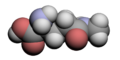 GMA 3D


Ad. Transform your life with W8MD's
GLP-1 weight loss injections special from $29.99 with insurance
|
WikiMD Medical Encyclopedia |
Medical Disclaimer: WikiMD is for informational purposes only and is not a substitute for professional medical advice. Content may be inaccurate or outdated and should not be used for diagnosis or treatment. Always consult your healthcare provider for medical decisions. Verify information with trusted sources such as CDC.gov and NIH.gov. By using this site, you agree that WikiMD is not liable for any outcomes related to its content. See full disclaimer.
Credits:Most images are courtesy of Wikimedia commons, and templates, categories Wikipedia, licensed under CC BY SA or similar.
Translate this page: - East Asian
中文,
日本,
한국어,
South Asian
हिन्दी,
தமிழ்,
తెలుగు,
Urdu,
ಕನ್ನಡ,
Southeast Asian
Indonesian,
Vietnamese,
Thai,
မြန်မာဘာသာ,
বাংলা
European
español,
Deutsch,
français,
Greek,
português do Brasil,
polski,
română,
русский,
Nederlands,
norsk,
svenska,
suomi,
Italian
Middle Eastern & African
عربى,
Turkish,
Persian,
Hebrew,
Afrikaans,
isiZulu,
Kiswahili,
Other
Bulgarian,
Hungarian,
Czech,
Swedish,
മലയാളം,
मराठी,
ਪੰਜਾਬੀ,
ગુજરાતી,
Portuguese,
Ukrainian
