White-nose syndrome
White-nose Syndrome (WNS) is a devastating disease affecting hibernating bats in North America. First identified in a cave in New York in 2006, the disease has since spread to various parts of the United States and Canada, causing significant declines in bat populations. The causative agent of WNS is a fungus known as Pseudogymnoascus destructans (Pd), which thrives in cold, humid environments typical of bat hibernacula.
Symptoms and Effects[edit]
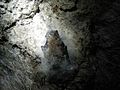
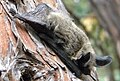
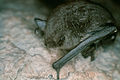
The most noticeable symptom of WNS is a white, powdery substance on the nose, ears, and wings of affected bats. The fungus invades the skin of hibernating bats, causing irritation and physiological disruptions. This leads to unusual behaviors such as waking from hibernation during winter, leading to depletion of fat reserves and, ultimately, starvation. WNS has a high mortality rate, with some colonies experiencing up to 90-100% loss.
Transmission and Spread[edit]
WNS is primarily spread through bat-to-bat contact. However, the fungus can also be transmitted via contaminated environments, such as caves and mines. Humans can inadvertently spread the fungus through clothing and equipment used in affected sites. The rapid spread of WNS across North America poses a significant threat to bat populations, biodiversity, and ecosystem health due to bats' role in pest control and pollination.
Conservation Efforts[edit]
Efforts to manage and mitigate the impact of WNS include research into the biology and spread of P. destructans, development of potential treatments, and protocols to decontaminate gear and restrict access to sensitive sites. Conservationists and researchers are also working on strategies to support bat populations, such as creating artificial hibernacula and enhancing natural habitats.
Impact[edit]
The decline in bat populations due to WNS has far-reaching ecological and economic impacts. Bats play a crucial role in controlling insect populations, including many agricultural pests. The loss of bats to WNS increases the need for chemical pesticides, with associated costs and environmental impacts. Furthermore, bats are important pollinators in many ecosystems, contributing to the health of plants and the overall biodiversity of areas they inhabit.

-
 White-nose syndrome
 -
 White-nose syndrome
 -
 White-nose syndrome
 -
 White-nose syndrome
 -
 White-nose syndrome
 -
 White-nose syndrome
 -
 White-nose syndrome
 -
 White-nose syndrome
 -
 White-nose syndrome
 -
 White-nose syndrome
 -
 White-nose syndrome
 -
 White-nose syndrome
.jpg)

.jpg)

_(9403869552)_(cropped).jpg)


.jpg)

.jpg)


Medical Disclaimer: WikiMD is for informational purposes only and is not a substitute for professional medical advice. Content may be inaccurate or outdated and should not be used for diagnosis or treatment. Always consult your healthcare provider for medical decisions. Verify information with trusted sources such as CDC.gov and NIH.gov. By using this site, you agree that WikiMD is not liable for any outcomes related to its content. See full disclaimer.
Credits:Most images are courtesy of Wikimedia commons, and templates, categories Wikipedia, licensed under CC BY SA or similar.
Translate page: - East Asian
中文,
日本,
한국어,
South Asian
हिन्दी,
தமிழ்,
తెలుగు,
Urdu,
ಕನ್ನಡ,
Southeast Asian
Indonesian,
Vietnamese,
Thai,
မြန်မာဘာသာ,
বাংলা
European
español,
Deutsch,
français,
Greek,
português do Brasil,
polski,
română,
русский,
Nederlands,
norsk,
svenska,
suomi,
Italian
Middle Eastern & African
عربى,
Turkish,
Persian,
Hebrew,
Afrikaans,
isiZulu,
Kiswahili,
Other
Bulgarian,
Hungarian,
Czech,
Swedish,
മലയാളം,
मराठी,
ਪੰਜਾਬੀ,
ગુજરાતી,
Portuguese,
Ukrainian

