Wet-bulb globe temperature
Wet-bulb globe temperature (WBGT) is a composite temperature used to estimate the effect of temperature, humidity, wind speed, and visible and infrared radiation (usually sunlight) on humans. It is used by industrial hygienists, athletes, and military personnel to determine appropriate exposure levels to high temperatures. It is derived from the following formula, which takes into consideration the temperature from three different thermometers: a standard mercury-in-glass thermometer, a wet-bulb thermometer (which includes a wet wick over its bulb), and a globe thermometer (which measures the mean radiant temperature).
Overview[edit]
The WBGT index was developed in the 1950s by the United States Marine Corps at Parris Island to reduce heat stress injuries in recruits. It has since been adopted by various organizations, including the American Conference of Governmental Industrial Hygienists (ACGIH) and the National Weather Service, for use in heat stress management.
Calculation[edit]
The WBGT is calculated using the formula:
- WBGT = 0.7T_w + 0.2T_g + 0.1T_d
where:
- T_w is the wet-bulb temperature,
- T_g is the globe temperature, and
- T_d is the dry-bulb temperature (ordinary air temperature).
In indoor environments, or when solar radiation is negligible, the formula is modified by excluding the T_g component:
- WBGT(indoor) = 0.7T_w + 0.3T_d
Applications[edit]
The WBGT index is used in various fields to manage heat stress, including:
- Occupational health and safety: to set guidelines for work/rest cycles, especially in hot industrial environments.
- Sports medicine: to provide recommendations for hydration and activity modifications during hot weather conditions.
- Military training and operations: to prevent heat-related illnesses during strenuous activities in hot environments.
Prevention of Heat Stress[edit]
To prevent heat stress, it is important to:
- Acclimatize individuals to hot environments gradually.
- Ensure adequate hydration.
- Modify work/rest cycles based on WBGT readings.
- Use appropriate clothing and personal protective equipment.
Limitations[edit]
While the WBGT index is a useful tool for assessing heat stress, it has limitations. It does not account for individual differences in heat tolerance, clothing insulation, or metabolic heat production. Therefore, it should be used as a guideline, with adjustments made for specific situations and individuals.
See Also[edit]
References[edit]
 | This medical article is a stub. You can help WikiMD by expanding the page. |
Wet-bulb globe temperature[edit]
-
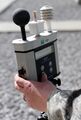 Bio-environmental prepares for summer
 -
 Analog WBGT meter


Medical Disclaimer: WikiMD is for informational purposes only and is not a substitute for professional medical advice. Content may be inaccurate or outdated and should not be used for diagnosis or treatment. Always consult your healthcare provider for medical decisions. Verify information with trusted sources such as CDC.gov and NIH.gov. By using this site, you agree that WikiMD is not liable for any outcomes related to its content. See full disclaimer.
Credits:Most images are courtesy of Wikimedia commons, and templates, categories Wikipedia, licensed under CC BY SA or similar.
Translate page: - East Asian
中文,
日本,
한국어,
South Asian
हिन्दी,
தமிழ்,
తెలుగు,
Urdu,
ಕನ್ನಡ,
Southeast Asian
Indonesian,
Vietnamese,
Thai,
မြန်မာဘာသာ,
বাংলা
European
español,
Deutsch,
français,
Greek,
português do Brasil,
polski,
română,
русский,
Nederlands,
norsk,
svenska,
suomi,
Italian
Middle Eastern & African
عربى,
Turkish,
Persian,
Hebrew,
Afrikaans,
isiZulu,
Kiswahili,
Other
Bulgarian,
Hungarian,
Czech,
Swedish,
മലയാളം,
मराठी,
ਪੰਜਾਬੀ,
ગુજરાતી,
Portuguese,
Ukrainian

