Wellcome Research Laboratories
Wellcome Research Laboratories was a pioneering pharmaceutical research institution and manufacturing firm in the United Kingdom, forming a crucial part of the Wellcome Trust's history, one of the world's largest biomedical research charities. Founded by Henry Wellcome, an American pharmacist who moved to the UK, the laboratories were instrumental in the development of various medical and pharmaceutical innovations.
History[edit]
The origins of Wellcome Research Laboratories trace back to the late 19th century when Henry Wellcome and his colleague Silas Burroughs formed a pharmaceutical company, Burroughs Wellcome & Co., in 1880. The company was among the first to introduce medicine in tablet form under the brand name "Tabloid" in the late 1880s. In the early 20th century, the company established the Wellcome Research Laboratories as part of its commitment to scientific research and development in the field of medicine.
Innovations and Contributions[edit]
Wellcome Research Laboratories made significant contributions to medical science, including the development of vaccines, antitoxins, and other pharmaceuticals. One of their notable achievements was the development of the first diphtheria antitoxin in the UK, which played a crucial role in combating the disease. They were also involved in the discovery and development of various other drugs, including the antimalarial drug quinine.
During the 20th century, the laboratories expanded their research into tropical diseases, reflecting Henry Wellcome's interest in medicine and healthcare in the British Empire's tropical colonies. This led to significant advancements in the treatment and understanding of diseases such as sleeping sickness and leishmaniasis.
Legacy[edit]
The legacy of Wellcome Research Laboratories is closely tied to the Wellcome Trust, which was established under Henry Wellcome's will after his death in 1936. The Trust became one of the world's leading funders of biomedical research, using the wealth generated by Wellcome's pharmaceutical ventures. In the late 20th century, the Wellcome Trust sold the Wellcome pharmaceutical business to Glaxo, forming GlaxoWellcome, which later became part of GlaxoSmithKline (GSK), a global pharmaceutical company.
Today, the Wellcome Trust continues to support scientific research with the aim of improving human and animal health. The legacy of Wellcome Research Laboratories lives on through the Trust's work, as well as through the continued impact of its pharmaceutical innovations on global health.
See Also[edit]

Wellcome Research Laboratories[edit]
-
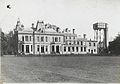 Main building of Wellcome Research Laboratories at Langley Court
 -
 "Old Boys" at Langley Court, Wellcome Research Laboratories


Sponsored Health Resource

W8MD Weight Loss, Sleep & MedSpa
Looking for physician-supervised weight loss, semaglutide, tirzepatide, or GLP-1 receptor agonist options? W8MD helps eligible patients in New York City, Brooklyn, New Jersey, Connecticut, Pennsylvania, Delaware, and greater Philadelphia with medical weight loss, sleep medicine, and long-term maintenance support.
GLP-1 specials: Affordable GLP-1 injections NYC and Philadelphia starting from $29.99/week and up for semaglutide with insurance accepted for qualifying visits, and $45/week and up for tirzepatide with insurance accepted for qualifying visits. Self-pay options start from $59.99/week and up for semaglutide and $69.99/week and up for tirzepatide.
- Medical weight loss NYC
- Affordable GLP-1 injections NYC
- Budget GLP-1 weight loss shots Philadelphia
- New Jersey medical weight loss
- NYC medical weight loss blog
- Philadelphia weight loss blog
- Sleep medicine and sleep apnea services
- W8MD MedSpa and wellness
Book a W8MD appointment · View GLP-1 specials
Paid promotional message. Eligibility, pricing, insurance coverage, medication availability, and results vary. Medical evaluation required.

Medical Disclaimer: WikiMD is for informational purposes only and is not a substitute for professional medical advice. Content may be inaccurate or outdated and should not be used for diagnosis or treatment. Always consult your healthcare provider for medical decisions. Verify information with trusted sources such as CDC.gov and NIH.gov. By using this site, you agree that WikiMD is not liable for any outcomes related to its content. See full disclaimer.
Credits:Most images are courtesy of Wikimedia commons, and templates, categories Wikipedia, licensed under CC BY SA or similar.
Translate page: - East Asian
中文,
日本,
한국어,
South Asian
हिन्दी,
தமிழ்,
తెలుగు,
Urdu,
ಕನ್ನಡ,
Southeast Asian
Indonesian,
Vietnamese,
Thai,
မြန်မာဘာသာ,
বাংলা
European
español,
Deutsch,
français,
Greek,
português do Brasil,
polski,
română,
русский,
Nederlands,
norsk,
svenska,
suomi,
Italian
Middle Eastern & African
عربى,
Turkish,
Persian,
Hebrew,
Afrikaans,
isiZulu,
Kiswahili,
Other
Bulgarian,
Hungarian,
Czech,
Swedish,
മലയാളം,
मराठी,
ਪੰਜਾਬੀ,
ગુજરાતી,
Portuguese,
Ukrainian

