Weed control
Weed Control
Weed control refers to the botanical component of pest management, which seeks to stop weeds, especially noxious or injurious weeds, from competing with desired flora and fauna, this includes domesticated plants and livestock, and in natural settings, it includes stopping non-local species competing with native, local, species, especially so in reserves and heritage areas.
Methods of Weed Control[edit]
Weed control is achieved by using various methods. These methods can be broadly classified into six categories: Preventive, Cultural, Mechanical, Biological, Chemical, and Integrated.
Preventive Weed Control[edit]
Preventive weed control involves actions taken to prevent the introduction, establishment, and spread of noxious weed species. This can include cleaning equipment to remove weed seeds, using certified weed-free crop seeds, and managing the borders of fields and roads to prevent weed establishment.
Cultural Weed Control[edit]
Cultural weed control involves modifying the environment, the condition of the crop or the behavior of the farmer to suppress weed growth and prevent weed problems. This can include crop rotation, intercropping, and altering planting dates.
Mechanical Weed Control[edit]
Mechanical weed control involves physically removing or killing weeds. This can include hand pulling, hoeing, plowing, and mowing. Mechanical methods also include thermal weed control like flame weeding and steaming.
Biological Weed Control[edit]
Biological weed control involves the use of organisms to control weeds. This can include insects, mites, nematodes, and pathogens that are natural enemies of the weed species. Biological control agents can be introduced to a weed population or their numbers can be enhanced through conservation methods.
Chemical Weed Control[edit]
Chemical weed control involves the use of herbicides to kill or inhibit weed growth. Herbicides can be selective (killing specific weed species while leaving the desired crop relatively unharmed) or non-selective (killing all vegetation with which they come into contact).
Integrated Weed Control[edit]
Integrated weed control involves the use of two or more control methods in a coordinated, planned manner. The goal of integrated weed control is to manage weed populations over the long term, rather than simply eliminating the weeds present at a particular time.
See Also[edit]

This article is a agriculture stub. You can help WikiMD by expanding it!

This article is a horticulture stub. You can help WikiMD by expanding it!

-
 Migrants weeding sugar beets
 -
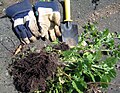 Weeding in a field
 -
 Weeding
 -
 Weed control in agriculture
 -
 Weed control tool
 -
 Flame weeder in use
 -
 Application of herbicides in rice

.jpg)


Ad. Transform your life with W8MD's
GLP-1 weight loss injections special from $29.99


W8MD Medical Weight Loss, Sleep and Medspa offers physician-supervised medical weight loss programs: NYC medical weight loss Philadelphia medical weight loss
Affordable GLP-1 Weight Loss ShotsAffordable GLP-1 Weight Loss Shots
Budget GLP-1 injections NYC (insurance & self-pay options) Popular treatments:
- Semaglutide starting from $29.99/week
- Tirzepatide starting from $45.00/week
✔ Most insurances accepted for visits ✔ Prior authorization support when eligible
Start your physician weight loss NYC journey today:
📍 NYC: Brooklyn weight loss center 📍 Philadelphia: Philadelphia weight loss center
📞 Call: 718-946-5500 (NYC) | 215-676-2334 (Philadelphia)
Tags: Affordable GLP1 weight loss NYC, Wegovy NYC, Zepbound NYC, Philadelphia medical weight loss


|
WikiMD Medical Encyclopedia |
Medical Disclaimer: WikiMD is not a substitute for professional medical advice. The information on WikiMD is provided as an information resource only, may be incorrect, outdated or misleading, and is not to be used or relied on for any diagnostic or treatment purposes. Please consult your health care provider before making any healthcare decisions or for guidance about a specific medical condition. WikiMD expressly disclaims responsibility, and shall have no liability, for any damages, loss, injury, or liability whatsoever suffered as a result of your reliance on the information contained in this site. By visiting this site you agree to the foregoing terms and conditions, which may from time to time be changed or supplemented by WikiMD. If you do not agree to the foregoing terms and conditions, you should not enter or use this site. See full disclaimer.
Credits:Most images are courtesy of Wikimedia commons, and templates, categories Wikipedia, licensed under CC BY SA or similar.
Translate this page: - East Asian
中文,
日本,
한국어,
South Asian
हिन्दी,
தமிழ்,
తెలుగు,
Urdu,
ಕನ್ನಡ,
Southeast Asian
Indonesian,
Vietnamese,
Thai,
မြန်မာဘာသာ,
বাংলা
European
español,
Deutsch,
français,
Greek,
português do Brasil,
polski,
română,
русский,
Nederlands,
norsk,
svenska,
suomi,
Italian
Middle Eastern & African
عربى,
Turkish,
Persian,
Hebrew,
Afrikaans,
isiZulu,
Kiswahili,
Other
Bulgarian,
Hungarian,
Czech,
Swedish,
മലയാളം,
मराठी,
ਪੰਜਾਬੀ,
ગુજરાતી,
Portuguese,
Ukrainian
