Vitelline duct
The Vitelline Duct, also known as the omphalomesenteric duct, is a structure present during the embryonic development of both humans and other animals. The duct connects the yolk sac to the midgut lumen, allowing nutrient uptake.
Etymology[edit]
The term "vitelline" is derived from the Latin word "vitellus" which means yolk. The term "omphalomesenteric" is derived from "omphalo-" meaning navel, and "mesenteric" referring to the mesentery, the part of the peritoneum that attaches the intestines to the posterior wall of the abdomen.
Development[edit]
During the third week of embryonic development, the yolk sac forms the vitelline duct. This duct connects the midgut to the yolk sac, providing a pathway for nutrient uptake. By the seventh week, the duct typically obliterates and disappears, leaving only a fibrous remnant known as the vitelline ligament.
Clinical Significance[edit]
In some cases, the vitelline duct fails to close during development, leading to a variety of potential anomalies such as Meckel's diverticulum, a vitelline cyst, or a vitelline fistula. These conditions can lead to complications such as gastrointestinal bleeding or intestinal obstruction.
Related Terms[edit]
See Also[edit]

This WikiMD article can only be edited by registered and verified editors. You can log in or register.
-
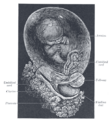 Vitelline duct
 -
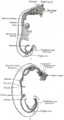 Vitelline duct
 -
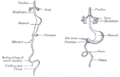 Vitelline duct


Medical Disclaimer: WikiMD is for informational purposes only and is not a substitute for professional medical advice. Content may be inaccurate or outdated and should not be used for diagnosis or treatment. Always consult your healthcare provider for medical decisions. Verify information with trusted sources such as CDC.gov and NIH.gov. By using this site, you agree that WikiMD is not liable for any outcomes related to its content. See full disclaimer.
Credits:Most images are courtesy of Wikimedia commons, and templates, categories Wikipedia, licensed under CC BY SA or similar.
Translate page: - East Asian
中文,
日本,
한국어,
South Asian
हिन्दी,
தமிழ்,
తెలుగు,
Urdu,
ಕನ್ನಡ,
Southeast Asian
Indonesian,
Vietnamese,
Thai,
မြန်မာဘာသာ,
বাংলা
European
español,
Deutsch,
français,
Greek,
português do Brasil,
polski,
română,
русский,
Nederlands,
norsk,
svenska,
suomi,
Italian
Middle Eastern & African
عربى,
Turkish,
Persian,
Hebrew,
Afrikaans,
isiZulu,
Kiswahili,
Other
Bulgarian,
Hungarian,
Czech,
Swedish,
മലയാളം,
मराठी,
ਪੰਜਾਬੀ,
ગુજરાતી,
Portuguese,
Ukrainian

