Viola sororia
Viola sororia, also known as the common blue violet, is a species of the Viola genus that is native to eastern North America. It is a state flower of Illinois, Rhode Island, New Jersey, and Wisconsin.
Description[edit]
Viola sororia is a perennial plant that typically grows to 10–20 cm in height. The leaves are heart-shaped, and the flowers are violet in color, although there are also white and yellow varieties. The plant blooms from April to June.
Habitat and Distribution[edit]
Viola sororia is found in a variety of habitats, including meadows, open woods, and along roadsides. It is native to eastern North America and is most common in the Midwest and Atlantic states.
Cultivation and Uses[edit]
Viola sororia is often grown as a groundcover in gardens for its attractive foliage and flowers. It is also used in traditional medicine for its purported healing properties.
Conservation Status[edit]
Viola sororia is not considered to be at risk of extinction. However, like all wildflowers, it is protected in many areas and should not be picked without permission.
See Also[edit]

This flora-related article is a stub. You can help WikiMD by expanding it.
-
 Viola sororia in Wisconsin
 -
 Herbarium specimen of Viola sororia
 -
 Color variant of Common Blue Violet (Viola sororia)
 -
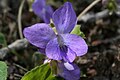 Viola sororia


_color_variant.jpg)

Medical Disclaimer: WikiMD is for informational purposes only and is not a substitute for professional medical advice. Content may be inaccurate or outdated and should not be used for diagnosis or treatment. Always consult your healthcare provider for medical decisions. Verify information with trusted sources such as CDC.gov and NIH.gov. By using this site, you agree that WikiMD is not liable for any outcomes related to its content. See full disclaimer.
Credits:Most images are courtesy of Wikimedia commons, and templates, categories Wikipedia, licensed under CC BY SA or similar.
Translate this page: - East Asian
中文,
日本,
한국어,
South Asian
हिन्दी,
தமிழ்,
తెలుగు,
Urdu,
ಕನ್ನಡ,
Southeast Asian
Indonesian,
Vietnamese,
Thai,
မြန်မာဘာသာ,
বাংলা
European
español,
Deutsch,
français,
Greek,
português do Brasil,
polski,
română,
русский,
Nederlands,
norsk,
svenska,
suomi,
Italian
Middle Eastern & African
عربى,
Turkish,
Persian,
Hebrew,
Afrikaans,
isiZulu,
Kiswahili,
Other
Bulgarian,
Hungarian,
Czech,
Swedish,
മലയാളം,
मराठी,
ਪੰਜਾਬੀ,
ગુજરાતી,
Portuguese,
Ukrainian
