Evaporation
Evaporation is a type of vaporization that occurs on the surface of a liquid as it changes into the gas phase. The surrounding gas must not be saturated with the evaporating substance. When the molecules of the liquid collide, they transfer energy to each other based on how they collide with each other.
Overview[edit]
Evaporation happens when atoms or molecules escape from the liquid and turn into a vapor. Not all of the molecules in a liquid have the same energy. When you have a puddle of water (H2O), it doesn't all evaporate at once. This is because as the temperature increases, more molecules have enough energy to overcome the intermolecular forces and start to turn into a gas.
Factors affecting evaporation[edit]
Several factors can affect the rate of evaporation;
- Temperature: The higher the temperature, the faster the evaporation. This is because as the temperature of the liquid increases, the kinetic energy of its molecules also increases.
- Surface area: A larger surface area allows more liquid to be in contact with the air, allowing for more evaporation to occur.
- Humidity: The lower the humidity, the faster the evaporation. If the air is already saturated with water vapor, it can reduce the rate of evaporation.
- Wind speed: The higher the wind speed, the more rapidly the water evaporates. This is because the wind moves the air away from the surface of the water, making it easier for new air molecules to come into contact with the water.
Applications of evaporation[edit]
Evaporation is used in many everyday applications such as:
- Distillation: A process that uses evaporation and condensation to purify water or separate liquids from each other.
- Evaporative cooling: A process that uses the heat absorbed by evaporation to cool an environment.
- Drying: Removing water from materials such as clothes or dishes by evaporation.
See also[edit]

This WikiMD article can only be edited by registered and verified editors. You can log in or register.
-
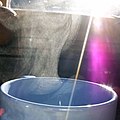 Evaporation
 -
 Condensation droplets
 -
 Misty road after rain
 -
 Water vapor pressure graph


Medical Disclaimer: WikiMD is for informational purposes only and is not a substitute for professional medical advice. Content may be inaccurate or outdated and should not be used for diagnosis or treatment. Always consult your healthcare provider for medical decisions. Verify information with trusted sources such as CDC.gov and NIH.gov. By using this site, you agree that WikiMD is not liable for any outcomes related to its content. See full disclaimer.
Credits:Most images are courtesy of Wikimedia commons, and templates, categories Wikipedia, licensed under CC BY SA or similar.
Translate page: - East Asian
中文,
日本,
한국어,
South Asian
हिन्दी,
தமிழ்,
తెలుగు,
Urdu,
ಕನ್ನಡ,
Southeast Asian
Indonesian,
Vietnamese,
Thai,
မြန်မာဘာသာ,
বাংলা
European
español,
Deutsch,
français,
Greek,
português do Brasil,
polski,
română,
русский,
Nederlands,
norsk,
svenska,
suomi,
Italian
Middle Eastern & African
عربى,
Turkish,
Persian,
Hebrew,
Afrikaans,
isiZulu,
Kiswahili,
Other
Bulgarian,
Hungarian,
Czech,
Swedish,
മലയാളം,
मराठी,
ਪੰਜਾਬੀ,
ગુજરાતી,
Portuguese,
Ukrainian

