United States Congress
Bicameral legislature of the United States federal government
The United States Congress is the bicameral legislature of the federal government of the United States and consists of two chambers: the Senate and the House of Representatives. The Congress meets in the United States Capitol in Washington, D.C.
History[edit]
The United States Congress was established by the U.S. Constitution in 1789, replacing the Articles of Confederation Congress. The first Congress met in New York City, which was the nation's capital at the time. The Congress has evolved over the years, adapting to the changing needs of the nation.
Structure[edit]
The Congress is divided into two chambers:
Senate[edit]
The Senate is composed of 100 members, two from each state, serving six-year terms. The Vice President of the United States serves as the President of the Senate but votes only to break ties.
House of Representatives[edit]
The House of Representatives has 435 members, with the number from each state determined by its population. Members serve two-year terms. The Speaker of the House is the presiding officer.
Powers and Functions[edit]
Congress has several key powers and functions, including:
- Legislation: Congress is responsible for drafting and passing laws.
- Budget: Congress controls federal spending and taxation.
- Oversight: Congress monitors the executive branch and federal agencies.
- Impeachment: Congress can impeach and remove federal officials, including the President.
Legislative Process[edit]
The legislative process involves several steps:
- Introduction: A bill is introduced in either chamber.
- Committee Review: The bill is assigned to a committee for study.
- Debate and Vote: The bill is debated and voted on in the chamber.
- Conference Committee: Differences between House and Senate versions are reconciled.
- Presidential Action: The President can sign or veto the bill.
Related pages[edit]
- United States Senate
- United States House of Representatives
- United States Capitol
- Federal government of the United States
References[edit]
- "The United States Congress." Library of Congress. Accessed October 2023.
- "The Legislative Process." Congressional Research Service. Accessed October 2023.
Gallery[edit]
-
The United States Legislative Process Overview
-
Johnson Impeachment Committee
-
 Signing of the Constitution
 -
United States Congress circa 1915
-
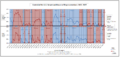 Control of the U.S. House and Senate
 -
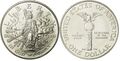 1989 Congress Bicentennial Dollar
 -
U.S. Currency Federal Reserve
-
USS Bon Homme Richard
-
Thompson Watergate
-
United States Capitol
-
Senate in session
-
Congress Hall committee room
-
Committee Consideration
-
Thomas Jefferson Building
-
Congressional Research Service
-
Private Law 86-407
-
U.S. House Committee
-
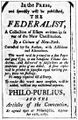 Advertisement of The Federalist


Advertise on WikiMD — 81,000+ full articles, ~900,000 total pages, ~250 million page views. Global reach, limited time promotional rates from $1/page/day. Learn more · View stats

Translate page: - East Asian
中文,
日本,
한국어,
South Asian
हिन्दी,
தமிழ்,
తెలుగు,
Urdu,
ಕನ್ನಡ,
Southeast Asian
Indonesian,
Vietnamese,
Thai,
မြန်မာဘာသာ,
বাংলা
European
español,
Deutsch,
français,
Greek,
português do Brasil,
polski,
română,
русский,
Nederlands,
norsk,
svenska,
suomi,
Italian
Middle Eastern & African
عربى,
Turkish,
Persian,
Hebrew,
Afrikaans,
isiZulu,
Kiswahili,
Other
Bulgarian,
Hungarian,
Czech,
Swedish,
മലയാളം,
मराठी,
ਪੰਜਾਬੀ,
ગુજરાતી,
Portuguese,
Ukrainian
About WikiMD • Contact • Disclaimer • Privacy • Copyright • Site statistics
Some content and images may originate from Wikimedia Commons or Wikipedia and remain subject to their stated licenses. Unless otherwise noted, eligible WikiMD content is available under CC BY-SA 4.0.
WikiMD Wellnesspedia — Free health & wellness information for patients, students, and health professionals.


_underway_in_the_Gulf_of_Tonkin_on_2_November_1964.jpg)


