Maxillary tuberosity
Maxillary Tuberosity
The Maxillary Tuberosity is a rounded area located at the posterior end of the upper jaw, or maxilla. It is found behind the last molar tooth in the upper jaw. The maxillary tuberosity is covered by the mucous membrane of the mouth.
Etymology[edit]
The term "Maxillary Tuberosity" is derived from the Latin words "maxilla" meaning jaw, and "tuberositas" meaning a small rounded projection or protuberance.
Anatomy[edit]
The maxillary tuberosity is a bony protuberance on the maxilla located posterior to the third molar. It is covered by a mucous membrane. The maxillary tuberosity contains the posterior superior alveolar nerve and blood vessels that supply the maxillary molars and the sinus membrane.
Clinical Significance[edit]
The maxillary tuberosity is of clinical significance in dentistry. It is often involved in procedures such as tooth extraction, dental implant placement, and maxillary sinus lift procedure. The size and shape of the maxillary tuberosity can affect the difficulty of these procedures.
Related Terms[edit]
- Maxilla: The upper jaw bone.
- Molar (tooth): The rearmost teeth in the mouth, used for grinding food.
- Posterior Superior Alveolar Nerve: A branch of the maxillary nerve that supplies the upper back teeth.
- Dental Implant: A surgical component that interfaces with the bone of the jaw to support a dental prosthesis.
- Maxillary Sinus Lift: A surgical procedure which aims to increase the amount of bone in the posterior maxilla.
 | This medical article is a stub. You can help WikiMD by expanding the page. |
Maxillary tuberosity gallery[edit]
-
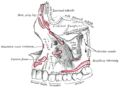 Gray157

Medical Disclaimer: WikiMD is for informational purposes only and is not a substitute for professional medical advice. Content may be inaccurate or outdated and should not be used for diagnosis or treatment. Always consult your healthcare provider for medical decisions. Verify information with trusted sources such as CDC.gov and NIH.gov. By using this site, you agree that WikiMD is not liable for any outcomes related to its content. See full disclaimer.
Credits:Most images are courtesy of Wikimedia commons, and templates, categories Wikipedia, licensed under CC BY SA or similar.
Translate this page: - East Asian
中文,
日本,
한국어,
South Asian
हिन्दी,
தமிழ்,
తెలుగు,
Urdu,
ಕನ್ನಡ,
Southeast Asian
Indonesian,
Vietnamese,
Thai,
မြန်မာဘာသာ,
বাংলা
European
español,
Deutsch,
français,
Greek,
português do Brasil,
polski,
română,
русский,
Nederlands,
norsk,
svenska,
suomi,
Italian
Middle Eastern & African
عربى,
Turkish,
Persian,
Hebrew,
Afrikaans,
isiZulu,
Kiswahili,
Other
Bulgarian,
Hungarian,
Czech,
Swedish,
മലയാളം,
मराठी,
ਪੰਜਾਬੀ,
ગુજરાતી,
Portuguese,
Ukrainian

