Diaphragmatic rupture

Editor-In-Chief: Prab R Tumpati, MD
Obesity, Sleep & Internal medicine
Founder, WikiMD Wellnesspedia &
W8MD's weight loss doctor NYC
Philadelphia GLP-1 weight loss and GLP-1 clinic NYC
| Diaphragmatic rupture | |
|---|---|
| Synonyms | N/A |
| Pronounce | N/A |
| Specialty | N/A |
| Symptoms | Abdominal pain, chest pain, respiratory distress |
| Complications | Herniation of abdominal organs into the chest cavity |
| Onset | Trauma |
| Duration | Acute |
| Types | N/A |
| Causes | Blunt trauma, penetrating trauma |
| Risks | Motor vehicle collision, falls, assault |
| Diagnosis | Chest X-ray, CT scan, ultrasound |
| Differential diagnosis | Pneumothorax, hemothorax, pulmonary contusion |
| Prevention | N/A |
| Treatment | Surgical repair |
| Medication | N/A |
| Prognosis | Variable, depends on associated injuries |
| Frequency | Occurs in 5% of patients with major blunt trauma |
| Deaths | N/A |
Diaphragmatic rupture is a tear of the diaphragm, the muscle across the bottom of the rib cage that plays a crucial role in respiration. This condition can result from blunt or penetrating trauma and is a serious injury that can lead to significant complications, including respiratory distress and damage to abdominal organs that herniate into the chest cavity.
Causes[edit]
Diaphragmatic rupture is most commonly caused by traumatic events. The two primary mechanisms are:
- Blunt trauma: Often the result of motor vehicle accidents, falls from height, or severe blows to the abdomen or lower chest. The sudden increase in intra-abdominal pressure can cause the diaphragm to tear.
- Penetrating trauma: Stab wounds or gunshot wounds that pierce the abdomen or lower chest can directly lacerate the diaphragm.
Symptoms[edit]
Symptoms of diaphragmatic rupture can vary widely depending on the size of the tear and whether abdominal organs have herniated into the chest cavity. Common symptoms include:
- Difficulty breathing or shortness of breath
- Pain in the lower chest or upper abdomen
- Signs of shock in severe cases, such as rapid heart rate and low blood pressure
Diagnosis[edit]
Diagnosis of diaphragmatic rupture can be challenging, as symptoms may be nonspecific or attributed to other injuries sustained during trauma. Diagnostic tools include:
- Chest X-ray: May show abnormal elevation of one side of the diaphragm, or abdominal organs in the chest cavity.
- Computed tomography (CT) scan: Provides detailed images that can help identify the tear and any herniated organs.
- Magnetic resonance imaging (MRI): Can be used in certain cases for its superior contrast resolution.
Treatment[edit]
Treatment of diaphragmatic rupture typically involves surgery to repair the tear and return any herniated organs to the abdominal cavity. Surgical approaches can include:
- Laparotomy: An open surgery through the abdomen.
- Thoracotomy: An open surgery through the chest, if access from the abdomen is not feasible or if there are also injuries to the chest that need to be addressed.
- Laparoscopy or thoracoscopy: Minimally invasive surgeries may be an option in some cases, depending on the extent of the injury and the patient's overall condition.
Complications[edit]
If not treated promptly, diaphragmatic rupture can lead to serious complications, including:
- Respiratory distress or failure
- Strangulation of herniated organs, leading to necrosis
- Chronic pain and disability
Prevention[edit]
Prevention of diaphragmatic rupture is largely focused on minimizing the risk of trauma through safety measures such as wearing seat belts, using airbags when driving, and following safety guidelines to prevent falls and injuries.
Gallery[edit]
-
 Diaphragmatic rupture
 -
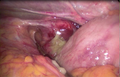 Diaphragmatic rupture
 -
 Ambroise Paré
 -
 Diaphragmatic rupture in a dog


 | This medical article is a stub. You can help WikiMD by expanding the page. |

Medical Disclaimer: WikiMD is for informational purposes only and is not a substitute for professional medical advice. Content may be inaccurate or outdated and should not be used for diagnosis or treatment. Always consult your healthcare provider for medical decisions. Verify information with trusted sources such as CDC.gov and NIH.gov. By using this site, you agree that WikiMD is not liable for any outcomes related to its content. See full disclaimer.
Credits:Most images are courtesy of Wikimedia commons, and templates, categories Wikipedia, licensed under CC BY SA or similar.
Translate page: - East Asian
中文,
日本,
한국어,
South Asian
हिन्दी,
தமிழ்,
తెలుగు,
Urdu,
ಕನ್ನಡ,
Southeast Asian
Indonesian,
Vietnamese,
Thai,
မြန်မာဘာသာ,
বাংলা
European
español,
Deutsch,
français,
Greek,
português do Brasil,
polski,
română,
русский,
Nederlands,
norsk,
svenska,
suomi,
Italian
Middle Eastern & African
عربى,
Turkish,
Persian,
Hebrew,
Afrikaans,
isiZulu,
Kiswahili,
Other
Bulgarian,
Hungarian,
Czech,
Swedish,
മലയാളം,
मराठी,
ਪੰਜਾਬੀ,
ગુજરાતી,
Portuguese,
Ukrainian

