Tissue-type plasminogen activator
Tissue-type plasminogen activator (tPA) is a serine protease found in endothelial cells that plays a crucial role in the breakdown of blood clots. It is a enzyme that catalyzes the conversion of plasminogen to plasmin, the major enzyme responsible for clot breakdown.
Function[edit]
tPA is produced by the endothelium of blood vessels and is released into the blood after an injury. It binds to a substrate called plasminogen, which is found in the blood. This binding triggers a conformational change in plasminogen, converting it into its active form, plasmin. Plasmin then degrades fibrin, the main component of blood clots.
Clinical significance[edit]
tPA is used in medicine to break down clots in patients with ischemic stroke, myocardial infarction, and pulmonary embolism. It is administered intravenously in a hospital setting. The use of tPA is not without risks, as it can cause bleeding and hemorrhagic stroke.
Pharmacology[edit]
In pharmacology, tPA is used as a thrombolytic agent to treat acute ischemic stroke. It is the only approved treatment for dissolving blood clots that cause most types of stroke. The drug is administered intravenously and can be given within 4.5 hours of the onset of stroke symptoms.
See also[edit]
References[edit]

-
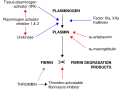 Fibrinolysis process
 -
tPA pathways
-
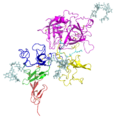 Tissue Plasminogen Activator structure
 -
Tissue Plasminogen Activator animation


Sponsored Health Resource

W8MD Weight Loss, Sleep & MedSpa
Looking for physician-supervised weight loss, semaglutide, tirzepatide, or GLP-1 receptor agonist options? W8MD helps eligible patients in New York City, Brooklyn, New Jersey, Connecticut, Pennsylvania, Delaware, and greater Philadelphia with medical weight loss, sleep medicine, and long-term maintenance support.
GLP-1 specials: Affordable GLP-1 injections NYC and Philadelphia starting from $29.99/week and up for semaglutide with insurance accepted for qualifying visits, and $45/week and up for tirzepatide with insurance accepted for qualifying visits. Self-pay options start from $59.99/week and up for semaglutide and $69.99/week and up for tirzepatide.
Medical weight loss NYC | Affordable GLP-1 injections NYC | Budget GLP-1 weight loss shots Philadelphia | New Jersey medical weight loss | NYC medical weight loss | Philadelphia medical weight loss | Sleep clinic NYC | W8MD's Philadelphia GLP-1 doctor | Weight loss prescriptions NYC
Book a W8MD appointment · View GLP-1 specials
Paid promotional message. Eligibility, pricing, insurance coverage, medication availability, and results vary. Medical evaluation required.

Medical Disclaimer: WikiMD is for informational purposes only and is not a substitute for professional medical advice. Content may be inaccurate or outdated and should not be used for diagnosis or treatment. Always consult your healthcare provider for medical decisions. Verify information with trusted sources such as CDC.gov and NIH.gov. By using this site, you agree that WikiMD is not liable for any outcomes related to its content. See full disclaimer.
Credits:Most images are courtesy of Wikimedia commons, and templates, categories Wikipedia, licensed under CC BY SA or similar.
Translate page: - East Asian
中文,
日本,
한국어,
South Asian
हिन्दी,
தமிழ்,
తెలుగు,
Urdu,
ಕನ್ನಡ,
Southeast Asian
Indonesian,
Vietnamese,
Thai,
မြန်မာဘာသာ,
বাংলা
European
español,
Deutsch,
français,
Greek,
português do Brasil,
polski,
română,
русский,
Nederlands,
norsk,
svenska,
suomi,
Italian
Middle Eastern & African
عربى,
Turkish,
Persian,
Hebrew,
Afrikaans,
isiZulu,
Kiswahili,
Other
Bulgarian,
Hungarian,
Czech,
Swedish,
മലയാളം,
मराठी,
ਪੰਜਾਬੀ,
ગુજરાતી,
Portuguese,
Ukrainian


