Thiazinamium metilsulfate
Thiazinamium Metilsulfate is a pharmacological agent that belongs to the class of drugs known as anticholinergics. It is primarily used in the treatment of gastrointestinal disorders and respiratory diseases.
Pharmacodynamics[edit]
Thiazinamium Metilsulfate works by blocking the action of acetylcholine, a neurotransmitter that transmits signals in the nervous system. By inhibiting the action of acetylcholine, Thiazinamium Metilsulfate reduces the contractions of smooth muscles in the gastrointestinal tract and bronchial tubes, thereby relieving symptoms associated with disorders in these areas.
Pharmacokinetics[edit]
After oral administration, Thiazinamium Metilsulfate is rapidly absorbed from the gastrointestinal tract. It is metabolized in the liver and excreted in the urine. The half-life of Thiazinamium Metilsulfate is approximately 3 to 4 hours.
Indications[edit]
Thiazinamium Metilsulfate is indicated for the treatment of various gastrointestinal disorders such as peptic ulcer, irritable bowel syndrome, and gastroenteritis. It is also used in the management of respiratory diseases like chronic bronchitis and asthma.
Side Effects[edit]
Common side effects of Thiazinamium Metilsulfate include dry mouth, blurred vision, constipation, and urinary retention. In rare cases, it may cause tachycardia, hypertension, and allergic reactions.
Contraindications[edit]
Thiazinamium Metilsulfate is contraindicated in patients with glaucoma, prostatic hypertrophy, and myasthenia gravis. It should also be used with caution in elderly patients and those with cardiovascular diseases.
Interactions[edit]
Thiazinamium Metilsulfate may interact with other anticholinergic drugs, increasing the risk of side effects. It may also interact with antihistamines, tricyclic antidepressants, and phenothiazines.
Dosage[edit]
The dosage of Thiazinamium Metilsulfate varies depending on the condition being treated and the patient's response to the drug. It is usually taken orally, 3 to 4 times a day.
See Also[edit]

-
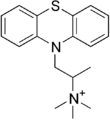 Thiazinamium metilsulfate
 -
 Thiazinium chloride synthesis


Advertise on WikiMD — 81,000+ full articles, ~900,000 total pages, ~250 million page views. Global reach, limited time promotional rates from $1/page/day. Learn more · View stats

Medical Disclaimer: WikiMD is for informational purposes only and is not a substitute for professional medical advice. Content may be inaccurate or outdated and should not be used for diagnosis or treatment. Always consult your healthcare provider for medical decisions. Verify information with trusted sources such as CDC.gov and NIH.gov. By using this site, you agree that WikiMD is not liable for any outcomes related to its content. See full disclaimer.
Credits:Most images are courtesy of Wikimedia commons, and templates, categories Wikipedia, licensed under CC BY SA or similar.
Translate page: - East Asian
中文,
日本,
한국어,
South Asian
हिन्दी,
தமிழ்,
తెలుగు,
Urdu,
ಕನ್ನಡ,
Southeast Asian
Indonesian,
Vietnamese,
Thai,
မြန်မာဘာသာ,
বাংলা
European
español,
Deutsch,
français,
Greek,
português do Brasil,
polski,
română,
русский,
Nederlands,
norsk,
svenska,
suomi,
Italian
Middle Eastern & African
عربى,
Turkish,
Persian,
Hebrew,
Afrikaans,
isiZulu,
Kiswahili,
Other
Bulgarian,
Hungarian,
Czech,
Swedish,
മലയാളം,
मराठी,
ਪੰਜਾਬੀ,
ગુજરાતી,
Portuguese,
Ukrainian

