Theodor Schwann
Theodor Schwann (7 December 1810 – 11 January 1882) was a German physiologist. His many contributions to biology include the development of cell theory, the discovery of Schwann cells in the peripheral nervous system, the discovery and study of pectin, and the discovery of the organic nature of yeast.
Early life and education[edit]
Schwann was born in Neuss, Prussia, the youngest of four children. His father was a goldsmith, later a printer. Schwann studied at the Jesuits College in Cologne, and then at Bonn, where he met Johannes Peter Müller. He then went to Würzburg for his medical studies.
Career[edit]
Schwann became an assistant to Müller. He published his first paper on the taste buds of the tongue in 1837. In 1839, he published Microscopical Researches into the Accordance in the Structure and Growth of Animals and Plants. This was one of the major statements of the cell theory.
Legacy[edit]
Schwann is considered one of the founders of the cell theory, along with Matthias Jakob Schleiden and Rudolf Virchow. His major contribution to biology was his development of this theory.
See also[edit]
References[edit]
External links[edit]

This WikiMD article can only be edited by registered and verified editors. You can log in or register.
-
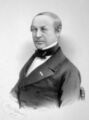 Theodor Schwann
 -
 Theodor Schwann, founder of cell theory

_Schwann_(1810-1882),_fondateur_de_la_th%C3%A9orie_cellulaire_(1839),_Institut_de_Zoologie,_Li%C3%A8ge.jpg)

Medical Disclaimer: WikiMD is for informational purposes only and is not a substitute for professional medical advice. Content may be inaccurate or outdated and should not be used for diagnosis or treatment. Always consult your healthcare provider for medical decisions. Verify information with trusted sources such as CDC.gov and NIH.gov. By using this site, you agree that WikiMD is not liable for any outcomes related to its content. See full disclaimer.
Credits:Most images are courtesy of Wikimedia commons, and templates, categories Wikipedia, licensed under CC BY SA or similar.
Translate page: - East Asian
中文,
日本,
한국어,
South Asian
हिन्दी,
தமிழ்,
తెలుగు,
Urdu,
ಕನ್ನಡ,
Southeast Asian
Indonesian,
Vietnamese,
Thai,
မြန်မာဘာသာ,
বাংলা
European
español,
Deutsch,
français,
Greek,
português do Brasil,
polski,
română,
русский,
Nederlands,
norsk,
svenska,
suomi,
Italian
Middle Eastern & African
عربى,
Turkish,
Persian,
Hebrew,
Afrikaans,
isiZulu,
Kiswahili,
Other
Bulgarian,
Hungarian,
Czech,
Swedish,
മലയാളം,
मराठी,
ਪੰਜਾਬੀ,
ગુજરાતી,
Portuguese,
Ukrainian

