Synovial membrane
Synovial membrane or synovium is a specialized connective tissue that lines the inner surface of capsules of synovial joints and tendon sheath. It makes direct contact with the synovial fluid lubricant, which it is primarily responsible for maintaining. In contact with the synovial fluid at the tissue surface are many rounded macrophage-like synovial cells and type B synovial cells.
Structure[edit]
The synovial membrane is a thin, smooth layer of connective tissue that lines the surfaces of the joint capsule and secretes synovial fluid. It is primarily made up of two types of cells, but is also contains fat cells and is surrounded by a network of blood vessels and lymphatic vessels.
Cells[edit]
The synovial membrane is primarily made up of two types of cells. These are type A synovial cells and type B synovial cells. Type A synovial cells are similar to macrophages and are responsible for the removal of wear-and-tear debris from the synovial fluid. Type B synovial cells are responsible for the secretion of hyaluronan and lubricin, the two main components of the synovial fluid.
Function[edit]
The synovial membrane's main function is to produce and maintain the synovial fluid, a thick, clear liquid that lubricates the joints and allows for smooth movement. The synovial fluid also provides nutrients to the avascular articular cartilage and removes waste products from the joint capsule.
Clinical significance[edit]
Diseases and conditions that affect the synovial membrane can lead to joint pain and loss of function. These include rheumatoid arthritis, osteoarthritis, gout, and lupus. In these conditions, the synovial membrane becomes inflamed and thickened, leading to an overproduction of synovial fluid and causing pain and swelling in the joint.
See also[edit]
References[edit]

This WikiMD article can only be edited by registered and verified editors. You can log in or register.
-
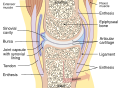 Diagram of a synovial joint
 -
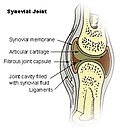 Illustration of a synovial joint
 -
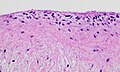 Histology of synovial membrane


Medical Disclaimer: WikiMD is for informational purposes only and is not a substitute for professional medical advice. Content may be inaccurate or outdated and should not be used for diagnosis or treatment. Always consult your healthcare provider for medical decisions. Verify information with trusted sources such as CDC.gov and NIH.gov. By using this site, you agree that WikiMD is not liable for any outcomes related to its content. See full disclaimer.
Credits:Most images are courtesy of Wikimedia commons, and templates, categories Wikipedia, licensed under CC BY SA or similar.
Translate page: - East Asian
中文,
日本,
한국어,
South Asian
हिन्दी,
தமிழ்,
తెలుగు,
Urdu,
ಕನ್ನಡ,
Southeast Asian
Indonesian,
Vietnamese,
Thai,
မြန်မာဘာသာ,
বাংলা
European
español,
Deutsch,
français,
Greek,
português do Brasil,
polski,
română,
русский,
Nederlands,
norsk,
svenska,
suomi,
Italian
Middle Eastern & African
عربى,
Turkish,
Persian,
Hebrew,
Afrikaans,
isiZulu,
Kiswahili,
Other
Bulgarian,
Hungarian,
Czech,
Swedish,
മലയാളം,
मराठी,
ਪੰਜਾਬੀ,
ગુજરાતી,
Portuguese,
Ukrainian

