Swiss cheese model
The Swiss Cheese Model is a metaphor used in risk management, safety engineering, and healthcare to describe a system of accident causation. This model illustrates how layers of defense, represented metaphorically as slices of Swiss cheese, can prevent hazards from leading to accidents. Each slice of cheese is a safeguard that can reduce the risk of a hazard becoming an incident. However, like Swiss cheese, these layers are not perfect and contain holes, which represent weaknesses or failures in each layer of defense. The alignment of these holes in multiple layers can lead to a pathway through which a hazard can pass, leading to an accident or failure.
Origins[edit]
The Swiss Cheese Model was popularized by James Reason, a British psychologist, in the 1990s. Reason's work in human error and organizational safety has been influential in developing theories about system safety and error management. The model has been widely adopted across various industries, especially in aviation, healthcare, and engineering, to understand and improve safety.
Components[edit]
The model consists of several key components:
- Holes: Represent failures or weaknesses in the system's defenses. These can be due to human error, equipment failure, or procedural inadequacies.
- Slices of Cheese: Each slice represents a layer of defense against failures. These can include safety barriers, procedures, and redundancies designed to catch or mitigate errors.
- Hazards: Potential sources of harm or adverse outcomes that the system aims to protect against.
- Accidents: The undesirable outcomes that occur when hazards are not effectively contained by the system's layers of defense.
Application[edit]
The Swiss Cheese Model is used to analyze past incidents and design safer systems. By identifying how and why the holes in the slices aligned, organizations can take steps to improve their layers of defense. This might involve adding new layers, improving existing ones, or changing procedures to reduce the likelihood of similar accidents in the future.
Criticism[edit]
While the Swiss Cheese Model has been influential, it has also faced criticism. Some argue that it oversimplifies complex systems and interactions, potentially leading to a focus on individual errors rather than systemic issues. Others suggest that the model does not adequately address how proactive measures can prevent holes from opening in the first place.
See Also[edit]

This safety related article is a stub. You can help WikiMD by expanding it.
-
Swiss cheese model
-
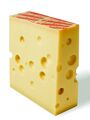 Emmentaler cheese block
 -
COVID-19 cheese model animation


Medical Disclaimer: WikiMD is for informational purposes only and is not a substitute for professional medical advice. Content may be inaccurate or outdated and should not be used for diagnosis or treatment. Always consult your healthcare provider for medical decisions. Verify information with trusted sources such as CDC.gov and NIH.gov. By using this site, you agree that WikiMD is not liable for any outcomes related to its content. See full disclaimer.
Credits:Most images are courtesy of Wikimedia commons, and templates, categories Wikipedia, licensed under CC BY SA or similar.
Translate page: - East Asian
中文,
日本,
한국어,
South Asian
हिन्दी,
தமிழ்,
తెలుగు,
Urdu,
ಕನ್ನಡ,
Southeast Asian
Indonesian,
Vietnamese,
Thai,
မြန်မာဘာသာ,
বাংলা
European
español,
Deutsch,
français,
Greek,
português do Brasil,
polski,
română,
русский,
Nederlands,
norsk,
svenska,
suomi,
Italian
Middle Eastern & African
عربى,
Turkish,
Persian,
Hebrew,
Afrikaans,
isiZulu,
Kiswahili,
Other
Bulgarian,
Hungarian,
Czech,
Swedish,
മലയാളം,
मराठी,
ਪੰਜਾਬੀ,
ગુજરાતી,
Portuguese,
Ukrainian


