Suya
Introduction[edit]
Suya is a popular West African dish, particularly in Nigeria, Niger, Cameroon, and some parts of Sudan. It is a skewered meat dish that is traditionally prepared by the Hausa people of northern Nigeria, Niger, and some parts of Sudan (referred to as agashe).
Preparation[edit]
The preparation of Suya involves skewering the meat (usually beef, ram, or chicken) on sticks after which it is marinated in a mix of spices known as Yaji, and then grilled over an open flame. The Yaji is a special spice mix that is made from groundnut powder, cayenne pepper, ginger, onion powder, and other seasonings.
Serving[edit]
Suya is typically served with slices of onions, tomatoes, and cabbages. It is often enjoyed as a main dish at home or as a street food in many West African countries. It is also a popular choice at parties and other social gatherings.
Variations[edit]
There are several variations of Suya, including Kilishi (a dried version of Suya), Balangu (a version made with goat meat), and Tsire (a version made with beef). Each variation has its unique taste and method of preparation.
Health Benefits[edit]
Despite being a delicious meal, Suya also has several health benefits. It is a good source of protein, which is essential for body building and repair of body tissues. The spices used in preparing Suya also have several health benefits. For instance, cayenne pepper is known to aid digestion, relieve migraines, and help in weight loss.
Conclusion[edit]
Suya is more than just a meal; it is a significant part of the culture and tradition of the Hausa people and other West African countries where it is enjoyed. Whether as a street food or a main dish at home, Suya remains a favorite among many.
See Also[edit]
References[edit]
 | This medical article is a stub. You can help WikiMD by expanding the page. |
-
 Varieties of Suya
 -
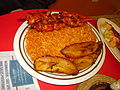 Suya with rice and plantains
 -
 Suya Seller


Medical Disclaimer: WikiMD is for informational purposes only and is not a substitute for professional medical advice. Content may be inaccurate or outdated and should not be used for diagnosis or treatment. Always consult your healthcare provider for medical decisions. Verify information with trusted sources such as CDC.gov and NIH.gov. By using this site, you agree that WikiMD is not liable for any outcomes related to its content. See full disclaimer.
Credits:Most images are courtesy of Wikimedia commons, and templates, categories Wikipedia, licensed under CC BY SA or similar.
Translate this page: - East Asian
中文,
日本,
한국어,
South Asian
हिन्दी,
தமிழ்,
తెలుగు,
Urdu,
ಕನ್ನಡ,
Southeast Asian
Indonesian,
Vietnamese,
Thai,
မြန်မာဘာသာ,
বাংলা
European
español,
Deutsch,
français,
Greek,
português do Brasil,
polski,
română,
русский,
Nederlands,
norsk,
svenska,
suomi,
Italian
Middle Eastern & African
عربى,
Turkish,
Persian,
Hebrew,
Afrikaans,
isiZulu,
Kiswahili,
Other
Bulgarian,
Hungarian,
Czech,
Swedish,
മലയാളം,
मराठी,
ਪੰਜਾਬੀ,
ગુજરાતી,
Portuguese,
Ukrainian
