Superfund
Superfund is a program established by the United States Congress in 1980 under the Comprehensive Environmental Response, Compensation, and Liability Act (CERCLA) to address abandoned or uncontrolled hazardous waste sites. It aims to clean up these sites and to respond to environmental emergencies, oil spills, and natural disasters in a timely manner. The program is administered by the Environmental Protection Agency (EPA) and is funded by a trust fund of the same name.
Overview[edit]
The Superfund program identifies sites where hazardous substances pose a significant risk to human health and the environment. Once a site is identified, it is placed on the National Priorities List (NPL), which prioritizes sites for cleanup based on a Hazard Ranking System. The EPA then works to identify potentially responsible parties (PRPs) who are liable for the contamination and seeks their cooperation in the cleanup process. If PRPs cannot be found or are unable to perform the cleanup, the Superfund trust fund pays for the cleanup activities.
History[edit]
The impetus for the Superfund program came from a series of environmental disasters in the 1970s, most notably the Love Canal incident in Niagara Falls, New York, where the disposal of toxic waste led to widespread health problems among local residents. Public outcry over this and similar incidents led Congress to establish the Superfund program to address the legacy of hazardous waste sites.
Funding[edit]
Originally, the Superfund program was funded by taxes on the petroleum and chemical industries, but since 1995, the program has been funded primarily through general revenues of the federal government. There have been proposals to reinstate the taxes to ensure a dedicated funding source for cleanup activities.
Cleanup Process[edit]
The Superfund cleanup process involves several steps, including preliminary assessment and site inspection, placement on the National Priorities List, remedial investigation and feasibility study, record of decision, remedial design and action, and site maintenance and monitoring post-cleanup. The goal is to reduce or eliminate the risks associated with hazardous substances at each site.
Controversies and Challenges[edit]
The Superfund program has faced various challenges and controversies over the years, including debates over funding, the pace of cleanups, and the effectiveness of cleanup efforts. Some critics argue that the program has been slow to clean up sites and that more resources are needed to address the backlog of contaminated sites.
Impact[edit]
Despite these challenges, the Superfund program has made significant progress in cleaning up hazardous waste sites across the country. It has mitigated the risks of exposure to hazardous substances for millions of Americans and has led to the redevelopment of formerly contaminated properties for new uses.
See Also[edit]
- Environmental Protection Agency
- Hazardous waste
- Love Canal
- Environmental remediation
- National Priorities List
- Comprehensive Environmental Response, Compensation, and Liability Act
 | This environment-related article is a stub. You can help WikiMD by expanding the page. |
-
Drilling at Bruin Lagoon
-
Dredging on the Hudson River
-
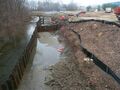 View from Newell Street, November 1999
 -
Map of Superfund Sites
-
Superfund Site Assessment Process
-
Kin Buc Landfill
_November_1999,_%27Half_mile%27_view_from_Newell_Street_(7984291745).jpg)
Sponsored Health Resource

W8MD Weight Loss, Sleep & MedSpa
Looking for physician-supervised weight loss, semaglutide, tirzepatide, or GLP-1 receptor agonist options? W8MD helps eligible patients in New York City, Brooklyn, New Jersey, Connecticut, Pennsylvania, Delaware, and greater Philadelphia with medical weight loss, sleep medicine, and long-term maintenance support.
GLP-1 specials: Affordable GLP-1 injections NYC and Philadelphia starting from $29.99/week and up for semaglutide with insurance accepted for qualifying visits, and $45/week and up for tirzepatide with insurance accepted for qualifying visits. Self-pay options start from $59.99/week and up for semaglutide and $69.99/week and up for tirzepatide.
Medical weight loss NYC | Affordable GLP-1 injections NYC | Budget GLP-1 weight loss shots Philadelphia | New Jersey medical weight loss | NYC medical weight loss | Philadelphia medical weight loss | Sleep clinic NYC | W8MD's Philadelphia GLP-1 doctor | Weight loss prescriptions NYC
Book a W8MD appointment · View GLP-1 specials
Paid promotional message. Eligibility, pricing, insurance coverage, medication availability, and results vary. Medical evaluation required.

Medical Disclaimer: WikiMD is for informational purposes only and is not a substitute for professional medical advice. Content may be inaccurate or outdated and should not be used for diagnosis or treatment. Always consult your healthcare provider for medical decisions. Verify information with trusted sources such as CDC.gov and NIH.gov. By using this site, you agree that WikiMD is not liable for any outcomes related to its content. See full disclaimer.
Credits:Most images are courtesy of Wikimedia commons, and templates, categories Wikipedia, licensed under CC BY SA or similar.
Translate page: - East Asian
中文,
日本,
한국어,
South Asian
हिन्दी,
தமிழ்,
తెలుగు,
Urdu,
ಕನ್ನಡ,
Southeast Asian
Indonesian,
Vietnamese,
Thai,
မြန်မာဘာသာ,
বাংলা
European
español,
Deutsch,
français,
Greek,
português do Brasil,
polski,
română,
русский,
Nederlands,
norsk,
svenska,
suomi,
Italian
Middle Eastern & African
عربى,
Turkish,
Persian,
Hebrew,
Afrikaans,
isiZulu,
Kiswahili,
Other
Bulgarian,
Hungarian,
Czech,
Swedish,
മലയാളം,
मराठी,
ਪੰਜਾਬੀ,
ગુજરાતી,
Portuguese,
Ukrainian


.jpg)


