Sujebi
Overview of Sujebi:
```
Sujebi
Sujebi is a traditional Korean soup consisting of hand-torn noodle dumplings made from wheat flour and water, cooked in a rich, anchovy-based broth with various vegetables and seafood.
History[edit]
Sujebi is believed to have originated during the Goryeo Dynasty, where it was a popular dish among commoners due to its simple ingredients and easy preparation.
Preparation[edit]
To prepare sujebi, a dough is made from wheat flour and water, which is then hand-torn into small, flat pieces. These pieces are added to a boiling broth made from anchovies, kelp, and soy sauce. Various vegetables such as onions, garlic, and zucchini, as well as seafood like clams and shrimp, are also added to the soup.
Variations[edit]
There are several variations of sujebi, including Kimchi sujebi, which includes kimchi as a main ingredient, and Seafood sujebi, which features a variety of seafood.
Serving[edit]
Sujebi is typically served hot, often as a comforting meal during the cold winter months. It is commonly enjoyed with kimchi and a bowl of rice.
See also[edit]
```
This article provides a brief overview of Sujebi, its history, preparation, variations, and how it is served. It also includes internal links to related topics for further reading.
-
Sujebi
-
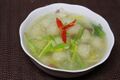 Gamja-ongsimi
 -
Jaecheop-sujebi
-
Kimchi-sujebi


Medical Disclaimer: WikiMD is for informational purposes only and is not a substitute for professional medical advice. Content may be inaccurate or outdated and should not be used for diagnosis or treatment. Always consult your healthcare provider for medical decisions. Verify information with trusted sources such as CDC.gov and NIH.gov. By using this site, you agree that WikiMD is not liable for any outcomes related to its content. See full disclaimer.
Credits:Most images are courtesy of Wikimedia commons, and templates, categories Wikipedia, licensed under CC BY SA or similar.
Translate page: - East Asian
中文,
日本,
한국어,
South Asian
हिन्दी,
தமிழ்,
తెలుగు,
Urdu,
ಕನ್ನಡ,
Southeast Asian
Indonesian,
Vietnamese,
Thai,
မြန်မာဘာသာ,
বাংলা
European
español,
Deutsch,
français,
Greek,
português do Brasil,
polski,
română,
русский,
Nederlands,
norsk,
svenska,
suomi,
Italian
Middle Eastern & African
عربى,
Turkish,
Persian,
Hebrew,
Afrikaans,
isiZulu,
Kiswahili,
Other
Bulgarian,
Hungarian,
Czech,
Swedish,
മലയാളം,
मराठी,
ਪੰਜਾਬੀ,
ગુજરાતી,
Portuguese,
Ukrainian


