Stereotactic biopsy
Stereotactic biopsy is a type of biopsy that uses a computer and imaging performed in at least two planes to localize a target lesion such as a tumor or microcalcifications in the body. The procedure is used to determine the nature of a lesion in the body.
Procedure[edit]
The patient is positioned so that the lesion can be accurately targeted. The computer calculates the position and depth of the lesion, and the radiologist or surgeon uses this information to guide the biopsy needle to the precise location. The procedure is minimally invasive and usually performed under local anesthesia.
Uses[edit]
Stereotactic biopsy is often used when a lesion is difficult to reach or when it is not visible through other methods such as ultrasound or mammography. It is commonly used in the diagnosis of breast cancer, brain tumors, and other conditions.
Advantages[edit]
The main advantage of stereotactic biopsy is its precision. It allows for accurate targeting of lesions, reducing the risk of damage to surrounding tissues. It is also less invasive than surgical biopsy, resulting in less pain and quicker recovery for the patient.
Risks[edit]
As with any procedure, there are risks associated with stereotactic biopsy. These may include infection, bleeding, and an adverse reaction to anesthesia. There is also a small risk that the biopsy will not provide a definitive diagnosis, necessitating further testing.
See also[edit]
 | This medical article is a stub. You can help WikiMD by expanding the page. |
Stereotactic biopsy[edit]
-
Equipment check on the stereotactic biopsy table
-
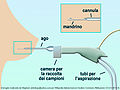 Mammotome


Medical Disclaimer: WikiMD is for informational purposes only and is not a substitute for professional medical advice. Content may be inaccurate or outdated and should not be used for diagnosis or treatment. Always consult your healthcare provider for medical decisions. Verify information with trusted sources such as CDC.gov and NIH.gov. By using this site, you agree that WikiMD is not liable for any outcomes related to its content. See full disclaimer.
Credits:Most images are courtesy of Wikimedia commons, and templates, categories Wikipedia, licensed under CC BY SA or similar.
Translate page: - East Asian
中文,
日本,
한국어,
South Asian
हिन्दी,
தமிழ்,
తెలుగు,
Urdu,
ಕನ್ನಡ,
Southeast Asian
Indonesian,
Vietnamese,
Thai,
မြန်မာဘာသာ,
বাংলা
European
español,
Deutsch,
français,
Greek,
português do Brasil,
polski,
română,
русский,
Nederlands,
norsk,
svenska,
suomi,
Italian
Middle Eastern & African
عربى,
Turkish,
Persian,
Hebrew,
Afrikaans,
isiZulu,
Kiswahili,
Other
Bulgarian,
Hungarian,
Czech,
Swedish,
മലയാളം,
मराठी,
ਪੰਜਾਬੀ,
ગુજરાતી,
Portuguese,
Ukrainian


