Stargazy pie
Stargazy pie is a traditional Cornish dish made of baked pilchards, along with eggs and potatoes, covered with a pastry crust. Although there are a few variations with different types of fish being used, the unique feature of stargazy pie is fish heads (and sometimes tails) protruding through the crust, so that they appear to be gazing skyward.
Etymology[edit]
The name "stargazy pie" comes from the way the fish heads protrude from the pie crust, as though 'gazing' at the stars. The dish is sometimes known as "starrey gazey pie".
History[edit]
The dish is traditionally held to have originated from the village of Mousehole in Cornwall and is traditionally eaten during the festival of Tom Bawcock's Eve to celebrate his heroic catch during a very stormy winter. According to the modern festival, which is combined with the Mousehole village illuminations, the entire catch was baked into a huge stargazy pie, encompassing seven types of fish and saving the village from starvation.
Preparation[edit]
The pie itself is made from a mixture of pilchards, eggs and potatoes, covered with a pastry crust. The position of the fish allows the oil that is released during cooking to drain into the pie, adding a fuller flavour. The eggs are hard boiled and then sliced. The pilchards or other small fish are boned and skinned, but are left whole. The pastry is usually shortcrust, but puff pastry can also be used. The whole fish are inserted through the crust of the pie, so that their heads (and sometimes tails) protrude, appearing to gaze at the stars.
Related dishes[edit]
Stargazy pie is a type of fish pie which has been important in British cuisine since the Middle Ages. Other variations of fish pies include those made with salmon or cod.
See also[edit]

This WikiMD article can only be edited by registered and verified editors. You can log in or register.
Stargazy_pie[edit]
-
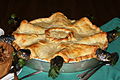 A traditional stargazy pie with fish heads poking through the crust.
 -
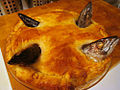 A freshly baked stargazy pie with golden brown crust.
 -
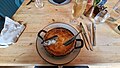 Close-up of a stargazy pie showing the fish heads and pastry.
 -
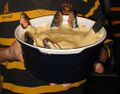 Stargazy pie before baking, with fish arranged in the pastry.


Medical Disclaimer: WikiMD is for informational purposes only and is not a substitute for professional medical advice. Content may be inaccurate or outdated and should not be used for diagnosis or treatment. Always consult your healthcare provider for medical decisions. Verify information with trusted sources such as CDC.gov and NIH.gov. By using this site, you agree that WikiMD is not liable for any outcomes related to its content. See full disclaimer.
Credits:Most images are courtesy of Wikimedia commons, and templates, categories Wikipedia, licensed under CC BY SA or similar.
Translate page: - East Asian
中文,
日本,
한국어,
South Asian
हिन्दी,
தமிழ்,
తెలుగు,
Urdu,
ಕನ್ನಡ,
Southeast Asian
Indonesian,
Vietnamese,
Thai,
မြန်မာဘာသာ,
বাংলা
European
español,
Deutsch,
français,
Greek,
português do Brasil,
polski,
română,
русский,
Nederlands,
norsk,
svenska,
suomi,
Italian
Middle Eastern & African
عربى,
Turkish,
Persian,
Hebrew,
Afrikaans,
isiZulu,
Kiswahili,
Other
Bulgarian,
Hungarian,
Czech,
Swedish,
മലയാളം,
मराठी,
ਪੰਜਾਬੀ,
ગુજરાતી,
Portuguese,
Ukrainian

