St. Moritz
St. Moritz is a high Alpine resort town in the Engadine in Switzerland, at an elevation of about 1,800 metres (5,910 ft) above sea level. It is a municipality in the district of Maloja in the Swiss canton of Graubünden.
History[edit]
St. Moritz first became famous for its mineral springs, which were discovered, probably by the Celts, around 3,000 years ago. It was popularised as a spa resort in the 19th century and became a destination for winter sports with the opening of the first skiing facilities in the late 1800s.
Geography[edit]
St. Moritz is located in the Upper Engadine and is surrounded by the peaks of the Alps. The town consists of two parts: St. Moritz Dorf (the main part) and St. Moritz Bad (the spa resort part).
Tourism[edit]
St. Moritz is a popular destination for the international jet set and is known for its luxurious hotels and high-end shopping. It has hosted the Winter Olympics twice and is often home to world-class events such as the White Turf horse races.
Culture[edit]
St. Moritz is home to the Segantini Museum, dedicated to the painter Giovanni Segantini, and the Engadine Museum, which showcases local history and culture. The town also hosts a number of annual events, including the St. Moritz Art Masters and the St. Moritz Gourmet Festival.
Transport[edit]
St. Moritz is served by the Rhaetian Railway and has a local bus system. The nearest airport is in Samedan, about 5 km away.
See also[edit]


-
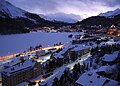 St Moritz
 -
 Johann Heinrich Müller, 1825-1894 J06 St Moritz, Panorama
 -
 Bundesarchiv Bild 102-10988, St. Moritz, Vierergespann
 -
 St Moritz Muottas
 -
 Cartier Polo World Cup on Snow 2008
 -
 St Moritz Panorama
 -
 Exterior Hotel H 02
 -
 St. Moritz center
 -
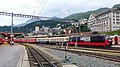 648, St. Moritz, 2014 (07)
 -
 Foster St Moritz


.JPG)

Ad. Transform your life with W8MD's
GLP-1 weight loss injections special from $29.99 with insurance
|
WikiMD Medical Encyclopedia |
Medical Disclaimer: WikiMD is for informational purposes only and is not a substitute for professional medical advice. Content may be inaccurate or outdated and should not be used for diagnosis or treatment. Always consult your healthcare provider for medical decisions. Verify information with trusted sources such as CDC.gov and NIH.gov. By using this site, you agree that WikiMD is not liable for any outcomes related to its content. See full disclaimer.
Credits:Most images are courtesy of Wikimedia commons, and templates, categories Wikipedia, licensed under CC BY SA or similar.
Translate this page: - East Asian
中文,
日本,
한국어,
South Asian
हिन्दी,
தமிழ்,
తెలుగు,
Urdu,
ಕನ್ನಡ,
Southeast Asian
Indonesian,
Vietnamese,
Thai,
မြန်မာဘာသာ,
বাংলা
European
español,
Deutsch,
français,
Greek,
português do Brasil,
polski,
română,
русский,
Nederlands,
norsk,
svenska,
suomi,
Italian
Middle Eastern & African
عربى,
Turkish,
Persian,
Hebrew,
Afrikaans,
isiZulu,
Kiswahili,
Other
Bulgarian,
Hungarian,
Czech,
Swedish,
മലയാളം,
मराठी,
ਪੰਜਾਬੀ,
ગુજરાતી,
Portuguese,
Ukrainian
