Spinal precautions
Spinal precautions, also known as spinal immobilization or spinal motion restriction, are a set of measures taken to prevent movement of the spine in individuals suspected of having a spinal injury. These precautions are crucial in the pre-hospital, emergency, and acute care settings to avoid further injury to the spinal cord, which could lead to permanent paralysis or other serious complications.
Indications[edit]
Spinal precautions are indicated in any situation where there is a suspicion of spinal injury. This can result from direct trauma to the spine, falls from significant heights, motor vehicle accidents, sports injuries, or any incident that involves a rapid deceleration or acceleration of the body. The presence of symptoms such as pain, tenderness along the spine, neurological deficits, or altered level of consciousness may also necessitate the application of spinal precautions.
Methods[edit]
The primary methods of maintaining spinal precautions include the use of a cervical collar to immobilize the neck and the application of a spinal board or vacuum mattress for the rest of the spine. These devices are designed to minimize movement of the vertebral column and reduce the risk of exacerbating any potential spinal cord injury.
Manual Stabilization[edit]
Initially, manual in-line stabilization (MILS) is often used, especially at the scene of an injury, to minimize cervical spine movement until more definitive immobilization methods can be applied.
Cervical Collars[edit]
Cervical collars are used to support the neck and limit movement of the cervical spine. They are typically applied as part of the initial management of a suspected spinal injury.
Spinal Boards[edit]
Spinal boards are used to provide a rigid surface for the entire body, further limiting movement of the spine during transport to a medical facility.
Assessment and Management[edit]
Upon arrival at a medical facility, further assessment is conducted, including imaging studies like X-rays, CT scans, or MRIs, to evaluate the extent of any spinal injuries. The decision to continue, adjust, or discontinue spinal precautions is based on the results of these assessments.
Controversies and Considerations[edit]
Recent evidence has led to some debate over the use of rigid spinal immobilization, particularly spinal boards, due to potential complications such as pressure ulcers, discomfort, and respiratory compromise. As a result, there is a growing emphasis on selective spinal immobilization, where spinal precautions are applied more judiciously based on specific criteria and clinical judgment.
Conclusion[edit]
Spinal precautions are a critical component of the initial management of suspected spinal injuries. They require careful application and ongoing assessment to balance the benefits of immobilization with the potential risks and discomforts associated with these interventions.
 | This medical article is a stub. You can help WikiMD by expanding the page. |
-
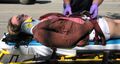 Cervical collar used in emergency situations
 -
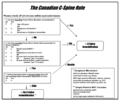 The Canadian C-spine rule
 -
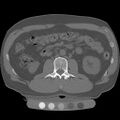 Trabecular bone of the spine by quantitative computed tomography
 -
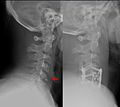 Teardrop fracture
 -
Halo brace
-
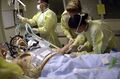 Spinal precautions


Sponsored Health Resource

W8MD Weight Loss, Sleep & MedSpa
Looking for physician-supervised weight loss, semaglutide, tirzepatide, or GLP-1 receptor agonist options? W8MD helps eligible patients in New York City, Brooklyn, New Jersey, Connecticut, Pennsylvania, Delaware, and greater Philadelphia with medical weight loss, sleep medicine, and long-term maintenance support.
GLP-1 specials: Affordable GLP-1 injections NYC and Philadelphia starting from $29.99/week and up for semaglutide with insurance accepted for qualifying visits, and $45/week and up for tirzepatide with insurance accepted for qualifying visits. Self-pay options start from $59.99/week and up for semaglutide and $69.99/week and up for tirzepatide.
- Medical weight loss NYC
- Affordable GLP-1 injections NYC
- Budget GLP-1 weight loss shots Philadelphia
- New Jersey medical weight loss
- NYC medical weight loss blog
- Philadelphia weight loss blog
- Sleep medicine and sleep apnea services
- W8MD MedSpa and wellness
Book a W8MD appointment · View GLP-1 specials
Paid promotional message. Eligibility, pricing, insurance coverage, medication availability, and results vary. Medical evaluation required.

Medical Disclaimer: WikiMD is for informational purposes only and is not a substitute for professional medical advice. Content may be inaccurate or outdated and should not be used for diagnosis or treatment. Always consult your healthcare provider for medical decisions. Verify information with trusted sources such as CDC.gov and NIH.gov. By using this site, you agree that WikiMD is not liable for any outcomes related to its content. See full disclaimer.
Credits:Most images are courtesy of Wikimedia commons, and templates, categories Wikipedia, licensed under CC BY SA or similar.
Translate page: - East Asian
中文,
日本,
한국어,
South Asian
हिन्दी,
தமிழ்,
తెలుగు,
Urdu,
ಕನ್ನಡ,
Southeast Asian
Indonesian,
Vietnamese,
Thai,
မြန်မာဘာသာ,
বাংলা
European
español,
Deutsch,
français,
Greek,
português do Brasil,
polski,
română,
русский,
Nederlands,
norsk,
svenska,
suomi,
Italian
Middle Eastern & African
عربى,
Turkish,
Persian,
Hebrew,
Afrikaans,
isiZulu,
Kiswahili,
Other
Bulgarian,
Hungarian,
Czech,
Swedish,
മലയാളം,
मराठी,
ਪੰਜਾਬੀ,
ગુજરાતી,
Portuguese,
Ukrainian


