Spam (food)
Spam (food) is a brand of canned precooked meat products made by Hormel Foods Corporation. The most common variety is made from pork shoulder and ham, but it also made with beef or chicken. Spam is known for its long shelf life and versatility in cooking, it can be fried, grilled, or added to soups and stews.
History[edit]
It was first introduced in the United States in 1937 and gained popularity worldwide, especially during World War II. Spam has become a cultural icon and has been referenced in various aspects of popular culture, including movies, television, and music. Spam was developed by Hormel Foods in 1937 in response to the need for a shelf-stable meat product. During World War II, it became a staple food for American and allied military forces, contributing to its worldwide popularity. The name "Spam" is a combination of the words "spiced" and "ham," although some claim it is an acronym for "Shoulder of Pork and Ham."
Ingredients and Production[edit]
Spam is primarily made from chopped pork shoulder meat and ham, mixed with salt, water, sugar, and sodium nitrite. The mixture is then canned and cooked at high temperatures, creating a shelf-stable product. Some Spam varieties also include additional ingredients, such as bacon, cheese, or jalapeño peppers.
Culinary Uses[edit]
Spam is versatile and can be eaten cold, sliced, fried, or baked. It is commonly used in sandwiches, salads, and as a breakfast item. Spam is also a key ingredient in various regional dishes, such as Hawaiian cuisine's Spam musubi, and the Philippine cuisine's Spam sisig.
Cultural Impact[edit]
Spam has become a cultural icon, with a dedicated fan base and multiple references in popular culture. The Spam Museum, located in Austin, Minnesota, showcases the history of Spam and its impact on global cuisine.
References[edit]
See Also[edit]
|
|
This article is a stub You can help WikiMD by registering and expanding it with useful details, internal links, formatting, and categories. Editing is available only to registered and verified users. WikiMD is a comprehensive, free health and wellness encyclopedia. |

-
Spam (food)
-
Spam (food)
-
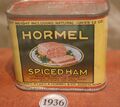 1936 Hormel Spiced Ham can
 -
Sliced Spam
-
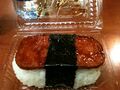 Spam musubi at Ninja Sushi
 -
 Spam meal
 -
Spam served with rice
-
Spam Museum in Austin, MN
-
Spam Museum Sign
-
Spam (food)
-
Spam Can Nutritional Label


Medical Disclaimer: WikiMD is for informational purposes only and is not a substitute for professional medical advice. Content may be inaccurate or outdated and should not be used for diagnosis or treatment. Always consult your healthcare provider for medical decisions. Verify information with trusted sources such as CDC.gov and NIH.gov. By using this site, you agree that WikiMD is not liable for any outcomes related to its content. See full disclaimer.
Credits:Most images are courtesy of Wikimedia commons, and templates, categories Wikipedia, licensed under CC BY SA or similar.
Translate page: - East Asian
中文,
日本,
한국어,
South Asian
हिन्दी,
தமிழ்,
తెలుగు,
Urdu,
ಕನ್ನಡ,
Southeast Asian
Indonesian,
Vietnamese,
Thai,
မြန်မာဘာသာ,
বাংলা
European
español,
Deutsch,
français,
Greek,
português do Brasil,
polski,
română,
русский,
Nederlands,
norsk,
svenska,
suomi,
Italian
Middle Eastern & African
عربى,
Turkish,
Persian,
Hebrew,
Afrikaans,
isiZulu,
Kiswahili,
Other
Bulgarian,
Hungarian,
Czech,
Swedish,
മലയാളം,
मराठी,
ਪੰਜਾਬੀ,
ગુજરાતી,
Portuguese,
Ukrainian


