N-Acetylaspartylglutamic acid
N-Acetylaspartylglutamic acid (abbreviated as NAAG) is a neuropeptide that is prevalent in the nervous system of humans and other mammals. It is the third most prevalent neurotransmitter in the mammalian nervous system. NAAG's functions are mediated through its interactions with the mGluR3 and mGluR2 receptors.
Structure[edit]
NAAG is a dipeptide composed of N-acetylaspartate (NAA) and glutamate. The structure of NAAG is unique among neurotransmitters, as it is the only known neurotransmitter to contain an acetylated amino acid.
Function[edit]
NAAG is involved in a variety of physiological processes in the nervous system. It acts as a neurotransmitter, modulating neuronal activity and participating in neurotransmission. NAAG is also involved in the regulation of pain perception and has been implicated in a variety of neurological and psychiatric disorders, including schizophrenia, neurodegenerative diseases, and chronic pain conditions.
Synthesis and Metabolism[edit]
NAAG is synthesized in neurons from NAA and glutamate by the enzyme NAAG synthetase. After release into the synaptic cleft, NAAG is hydrolyzed by the enzyme glutamate carboxypeptidase II (GCPII) into NAA and glutamate.
Clinical Significance[edit]
Due to its role in neurotransmission and pain regulation, NAAG is a potential target for the treatment of various neurological and psychiatric disorders. Inhibitors of GCPII, which increase levels of NAAG, have been investigated for their potential to treat conditions such as schizophrenia, neurodegenerative diseases, and chronic pain.
See Also[edit]
- Neuropeptide
- Neurotransmitter
- N-acetylaspartate
- Glutamate
- mGluR3
- mGluR2
- NAAG synthetase
- Glutamate carboxypeptidase II
This neurotransmitter-related article is a stub. You can help WikiMD by expanding it.
.svg) | This biochemistry article is a stub. You can help WikiMD by expanding the page. |
N-Acetylaspartylglutamic acid gallery[edit]
-
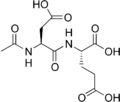 Acetylaspartylglutamic acid


Medical Disclaimer: WikiMD is for informational purposes only and is not a substitute for professional medical advice. Content may be inaccurate or outdated and should not be used for diagnosis or treatment. Always consult your healthcare provider for medical decisions. Verify information with trusted sources such as CDC.gov and NIH.gov. By using this site, you agree that WikiMD is not liable for any outcomes related to its content. See full disclaimer.
Credits:Most images are courtesy of Wikimedia commons, and templates, categories Wikipedia, licensed under CC BY SA or similar.
Translate page: - East Asian
中文,
日本,
한국어,
South Asian
हिन्दी,
தமிழ்,
తెలుగు,
Urdu,
ಕನ್ನಡ,
Southeast Asian
Indonesian,
Vietnamese,
Thai,
မြန်မာဘာသာ,
বাংলা
European
español,
Deutsch,
français,
Greek,
português do Brasil,
polski,
română,
русский,
Nederlands,
norsk,
svenska,
suomi,
Italian
Middle Eastern & African
عربى,
Turkish,
Persian,
Hebrew,
Afrikaans,
isiZulu,
Kiswahili,
Other
Bulgarian,
Hungarian,
Czech,
Swedish,
മലയാളം,
मराठी,
ਪੰਜਾਬੀ,
ગુજરાતી,
Portuguese,
Ukrainian

