Tetrasodium pyrophosphate
Chemical compound used in food and industrial applications
Tetrasodium pyrophosphate, also known as sodium pyrophosphate or TSPP, is an inorganic compound with the formula Na4P2O7. It is a white, water-soluble solid that serves as a buffering agent, emulsifier, and thickening agent in various applications, including food processing and industrial uses.
Chemical Properties[edit]
Tetrasodium pyrophosphate is a sodium salt of pyrophosphoric acid. It is composed of four sodium ions and a pyrophosphate anion. The compound is highly soluble in water, forming an alkaline solution. It has a melting point of approximately 988 °C and is stable under normal conditions.
Production[edit]
Tetrasodium pyrophosphate is produced by the thermal dehydration of sodium phosphate monobasic or dibasic. The process involves heating the sodium phosphate to remove water, resulting in the formation of the pyrophosphate compound:
- 2 Na2HPO4 _ Na4P2O7 + H2O
Applications[edit]
Food Industry[edit]
In the food industry, tetrasodium pyrophosphate is used as an emulsifier and thickening agent. It is commonly found in processed foods such as canned fish, pudding, and marshmallows. It helps to improve the texture and stability of these products. Additionally, it acts as a leavening agent in baking powders.
Industrial Uses[edit]
Tetrasodium pyrophosphate is used in various industrial applications. It serves as a detergent and water softener in cleaning products. In metal treatment, it is used for rust removal and as a metal cleaner. It is also employed in ceramics and textile processing.
Dental Care[edit]
In oral hygiene products, tetrasodium pyrophosphate is used to control tartar formation. It is a common ingredient in toothpaste and mouthwash, where it helps to prevent the accumulation of dental calculus.
Safety and Handling[edit]
Tetrasodium pyrophosphate is generally recognized as safe (GRAS) when used in accordance with good manufacturing practices. However, it should be handled with care, as it can cause irritation to the skin and eyes. Proper protective equipment, such as gloves and goggles, should be worn when handling the compound.
Environmental Impact[edit]
As a phosphate compound, tetrasodium pyrophosphate can contribute to eutrophication if released into water bodies in large quantities. It is important to manage its disposal properly to minimize environmental impact.
Related Pages[edit]
-
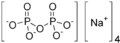 Sodium pyrophosphate
 -
Pyrofosforečnan sodný dekahydrát
-
 Just Egg 3


Sponsored Health Resource

W8MD Weight Loss, Sleep & MedSpa
Looking for physician-supervised weight loss, semaglutide, tirzepatide, or GLP-1 receptor agonist options? W8MD helps eligible patients in New York City, Brooklyn, New Jersey, Connecticut, Pennsylvania, Delaware, and greater Philadelphia with medical weight loss, sleep medicine, and long-term maintenance support.
GLP-1 specials: Affordable GLP-1 injections NYC and Philadelphia starting from $29.99/week and up for semaglutide with insurance accepted for qualifying visits, and $45/week and up for tirzepatide with insurance accepted for qualifying visits. Self-pay options start from $59.99/week and up for semaglutide and $69.99/week and up for tirzepatide.
- Medical weight loss NYC
- Affordable GLP-1 injections NYC
- Budget GLP-1 weight loss shots Philadelphia
- New Jersey medical weight loss
- NYC medical weight loss blog
- Philadelphia weight loss blog
- Sleep medicine and sleep apnea services
- W8MD MedSpa and wellness
Book a W8MD appointment · View GLP-1 specials
Paid promotional message. Eligibility, pricing, insurance coverage, medication availability, and results vary. Medical evaluation required.

Medical Disclaimer: WikiMD is for informational purposes only and is not a substitute for professional medical advice. Content may be inaccurate or outdated and should not be used for diagnosis or treatment. Always consult your healthcare provider for medical decisions. Verify information with trusted sources such as CDC.gov and NIH.gov. By using this site, you agree that WikiMD is not liable for any outcomes related to its content. See full disclaimer.
Credits:Most images are courtesy of Wikimedia commons, and templates, categories Wikipedia, licensed under CC BY SA or similar.
Translate page: - East Asian
中文,
日本,
한국어,
South Asian
हिन्दी,
தமிழ்,
తెలుగు,
Urdu,
ಕನ್ನಡ,
Southeast Asian
Indonesian,
Vietnamese,
Thai,
မြန်မာဘာသာ,
বাংলা
European
español,
Deutsch,
français,
Greek,
português do Brasil,
polski,
română,
русский,
Nederlands,
norsk,
svenska,
suomi,
Italian
Middle Eastern & African
عربى,
Turkish,
Persian,
Hebrew,
Afrikaans,
isiZulu,
Kiswahili,
Other
Bulgarian,
Hungarian,
Czech,
Swedish,
മലയാളം,
मराठी,
ਪੰਜਾਬੀ,
ગુજરાતી,
Portuguese,
Ukrainian


