Silene
Silene is a genus of flowering plants in the family Caryophyllaceae. It is commonly known as campion or catchfly. The genus includes approximately 700 species distributed across the Northern Hemisphere, with a few species extending into the Southern Hemisphere.
Description[edit]
Silene species are herbaceous plants, which can be annual, biennial, or perennial. They typically have opposite leaves and swollen nodes. The flowers are often brightly colored and can be white, pink, red, or purple. The petals are usually divided into two lobes and may have a claw at the base. The fruit is a capsule that opens by valves to release the seeds.
Habitat[edit]
Silene species are found in a variety of habitats, including meadows, woodlands, rocky slopes, and alpine regions. They are adapted to a range of environmental conditions, from dry, sandy soils to moist, fertile grounds.
Notable Species[edit]
- Silene dioica - Red Campion
- Silene latifolia - White Campion
- Silene vulgaris - Bladder Campion
- Silene acaulis - Moss Campion
Ecology[edit]
Silene species play a significant role in their ecosystems. They are a food source for various insects, including moths and butterflies. Some species are also known for their mutualistic relationships with pollinators. Additionally, certain Silene species are used as model organisms in ecological and evolutionary studies.
Cultivation and Uses[edit]
Many Silene species are cultivated for their ornamental value in gardens. They are appreciated for their attractive flowers and ease of growth. Some species, such as Silene vulgaris, are also used in traditional medicine and as food in certain cultures.
Conservation[edit]
Several Silene species are considered threatened or endangered due to habitat loss and other environmental pressures. Conservation efforts are in place to protect these species and their habitats.
Related Pages[edit]
Categories[edit]
 | This medical article is a stub. You can help WikiMD by expanding the page. |
-
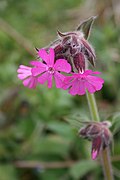 Silene dioica


Medical Disclaimer: WikiMD is for informational purposes only and is not a substitute for professional medical advice. Content may be inaccurate or outdated and should not be used for diagnosis or treatment. Always consult your healthcare provider for medical decisions. Verify information with trusted sources such as CDC.gov and NIH.gov. By using this site, you agree that WikiMD is not liable for any outcomes related to its content. See full disclaimer.
Credits:Most images are courtesy of Wikimedia commons, and templates, categories Wikipedia, licensed under CC BY SA or similar.
Translate page: - East Asian
中文,
日本,
한국어,
South Asian
हिन्दी,
தமிழ்,
తెలుగు,
Urdu,
ಕನ್ನಡ,
Southeast Asian
Indonesian,
Vietnamese,
Thai,
မြန်မာဘာသာ,
বাংলা
European
español,
Deutsch,
français,
Greek,
português do Brasil,
polski,
română,
русский,
Nederlands,
norsk,
svenska,
suomi,
Italian
Middle Eastern & African
عربى,
Turkish,
Persian,
Hebrew,
Afrikaans,
isiZulu,
Kiswahili,
Other
Bulgarian,
Hungarian,
Czech,
Swedish,
മലയാളം,
मराठी,
ਪੰਜਾਬੀ,
ગુજરાતી,
Portuguese,
Ukrainian

