Shrivelling
Shrivelling or shrinkage refers to the process by which an organism, tissue, or cell loses moisture and contracts in size. This phenomenon can occur in various contexts, including food preservation, plant physiology, and human health. Shrivelling is a critical factor in many biological and medical conditions, as well as in the preservation of food and other organic materials.
Causes[edit]
Shrivelling can be caused by a variety of factors, depending on the context. In plants, it is often the result of dehydration due to inadequate water supply, high temperatures, or damage to the plant's structures that absorb or retain water. In the context of food preservation, shrinkage is usually induced intentionally through processes like drying or smoking to reduce the moisture content and inhibit the growth of microorganisms.
In humans and other animals, shrivelling of skin or other tissues can be a sign of dehydration, certain diseases, or the natural aging process. For example, the dermis loses elasticity and moisture as part of aging, leading to the appearance of shrivelled or wrinkled skin.
Effects[edit]
The effects of shrivelling are varied and can have significant implications. In plants, severe dehydration and shrinkage can lead to reduced photosynthesis, impaired growth, and ultimately, the death of the plant. In food preservation, while shrinkage is often desirable to extend the shelf life of food, excessive loss of moisture can affect the texture, taste, and nutritional value of the product.
In medical contexts, shrivelling of tissues can indicate underlying health issues. For example, shrivelled skin can be a sign of severe dehydration, requiring immediate medical attention. Similarly, in conditions like scleroderma, the skin and connective tissues harden and shrink, affecting mobility and function.
Prevention and Treatment[edit]
Preventing and treating shrivelling involves addressing the underlying causes. For plants, ensuring adequate water supply and protecting them from excessive heat are key measures. In food preservation, controlling the conditions of drying or smoking processes can optimize moisture content without compromising quality.
For human health, maintaining proper hydration is crucial to prevent skin and tissue shrinkage. In cases where shrivelling is a symptom of a disease, treating the underlying condition is necessary. This may involve medications, lifestyle changes, or other interventions as recommended by a healthcare professional.
See Also[edit]
 | This medical article is a stub. You can help WikiMD by expanding the page. |
-
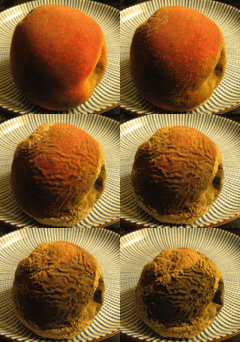 Decaying Peach
 -
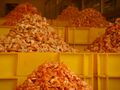 Dried Shrimp for Sale in Saigon


Advertise on WikiMD — 81,000+ full articles, ~900,000 total pages, ~250 million page views. Global reach, limited time promotional rates from $1/page/day. Learn more · View stats


Translate page: - East Asian
中文,
日本,
한국어,
South Asian
हिन्दी,
தமிழ்,
తెలుగు,
Urdu,
ಕನ್ನಡ,
Southeast Asian
Indonesian,
Vietnamese,
Thai,
မြန်မာဘာသာ,
বাংলা
European
español,
Deutsch,
français,
Greek,
português do Brasil,
polski,
română,
русский,
Nederlands,
norsk,
svenska,
suomi,
Italian
Middle Eastern & African
عربى,
Turkish,
Persian,
Hebrew,
Afrikaans,
isiZulu,
Kiswahili,
Other
Bulgarian,
Hungarian,
Czech,
Swedish,
മലയാളം,
मराठी,
ਪੰਜਾਬੀ,
ગુજરાતી,
Portuguese,
Ukrainian
About WikiMD • Contact • Disclaimer • Privacy • Copyright • Site statistics
Some content and images may originate from Wikimedia Commons or Wikipedia and remain subject to their stated licenses. Unless otherwise noted, eligible WikiMD content is available under CC BY-SA 4.0.
WikiMD Wellnesspedia — Free health & wellness information for patients, students, and health professionals.

