Shiitake
Shiitake (Lentinula edodes) is an edible mushroom native to East Asia, which is cultivated and consumed in many Asian countries. It is also considered a medicinal mushroom in some forms of traditional medicine.
Taxonomy and naming[edit]
The species Lentinula edodes belongs to the genus Lentinula in the family Marasmiaceae. It was first described scientifically by Miles Joseph Berkeley in 1877 as Agaricus edodes. In 1976, it was transferred to the new genus Lentinula by David Pegler. The mushroom's Japanese name shiitake (シイタケ) is composed of shii (Castanopsis), for the tree Castanopsis cuspidata that provides the dead logs on which it is typically cultivated, and take (茸), meaning "mushroom".
Description[edit]
Shiitake grow in groups on the decaying wood of deciduous trees, particularly shii, chestnut, oak, maple, beech, sweetgum, poplar, hornbeam, ironwood, and linden. Its natural distribution includes warm and moist climates in southeast Asia.
Cultivation[edit]
The cultivation of shiitake mushrooms dates back to AD 1100 in China, during the Song Dynasty. The Japanese have been cultivating the shiitake for over 1,000 years. Today, shiitake mushrooms are the second most cultivated mushrooms in the world.
Culinary uses[edit]
Shiitake are often dried and sold as preserved food in packages. These must be rehydrated by soaking in water before using. Many people prefer dried shiitake to fresh, considering that the sun-drying process draws out the umami flavour from the dried mushrooms by breaking down proteins into amino acids and transforms ergosterol to vitamin D.
Medicinal uses[edit]
Shiitake mushrooms have been researched for their medicinal benefits, most notably their anti-tumor effects in laboratory mice. These studies have also identified the polysaccharide lentinan, a (1-3) beta-D-glucan, as the active compound responsible for the anti-tumor effects.
See also[edit]

This WikiMD article can only be edited by registered and verified editors. You can log in or register.
-
 Shiitake growing
 -
 Lentinula edodes
 -
 Shiitake mushroom in vegetable store
 -
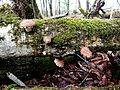 Wild Shiitake Mushroom Japan
 -
 Pyogobokkeum
 -
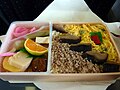 Shiitake Meshi Ekiben
 -
 Shiitake timelapse
 -
 Lentinan
 -
 Shiitake Mushroom


Advertise on WikiMD — 81,000+ full articles, ~900,000 total pages, ~250 million page views. Global reach, limited time promotional rates from $1/page/day. Learn more · View stats

Medical Disclaimer: WikiMD is for informational purposes only and is not a substitute for professional medical advice. Content may be inaccurate or outdated and should not be used for diagnosis or treatment. Always consult your healthcare provider for medical decisions. Verify information with trusted sources such as CDC.gov and NIH.gov. By using this site, you agree that WikiMD is not liable for any outcomes related to its content. See full disclaimer.
Credits:Most images are courtesy of Wikimedia commons, and templates, categories Wikipedia, licensed under CC BY SA or similar.
Translate page: - East Asian
中文,
日本,
한국어,
South Asian
हिन्दी,
தமிழ்,
తెలుగు,
Urdu,
ಕನ್ನಡ,
Southeast Asian
Indonesian,
Vietnamese,
Thai,
မြန်မာဘာသာ,
বাংলা
European
español,
Deutsch,
français,
Greek,
português do Brasil,
polski,
română,
русский,
Nederlands,
norsk,
svenska,
suomi,
Italian
Middle Eastern & African
عربى,
Turkish,
Persian,
Hebrew,
Afrikaans,
isiZulu,
Kiswahili,
Other
Bulgarian,
Hungarian,
Czech,
Swedish,
മലയാളം,
मराठी,
ਪੰਜਾਬੀ,
ગુજરાતી,
Portuguese,
Ukrainian

