Seismic magnitude scales
Seismic magnitude scales are tools used by seismologists to quantify the size of an earthquake. These scales measure the energy released by an earthquake, which is a crucial factor in understanding its potential damage and guiding emergency response efforts. The concept of magnitude was first introduced by Charles F. Richter in 1935, leading to the development of the Richter scale. However, as seismology has advanced, several other scales have been developed to more accurately measure the size of earthquakes in different contexts.
Richter Scale[edit]
The Richter scale, developed by Charles F. Richter in 1935, is a logarithmic scale that measures the amplitude of seismic waves. It was the first scale to provide a quantitative measure of an earthquake's size. The scale is logarithmic, meaning that each whole number increase on the scale represents a tenfold increase in measured amplitude and roughly 31.6 times more energy release. The Richter scale is most accurate for local earthquakes (distances less than 600 kilometers) with magnitudes between 3 and 7.
Moment Magnitude Scale[edit]
The Moment Magnitude Scale (Mw) is now the most widely used scale for measuring earthquake magnitudes globally. It was introduced in the 1970s to address the limitations of the Richter scale, especially for large earthquakes. The moment magnitude scale measures the total energy released by an earthquake. It is calculated based on the seismic moment of the earthquake, which is a product of the distance a fault moved and the force required to move it. The moment magnitude scale is considered to provide a more accurate and consistent measure of earthquake size across a wider range of earthquake types and sizes.
Other Scales[edit]
Several other scales have been developed for specific types of earthquakes or for use in particular regions. These include the Body Wave Magnitude (Mb) and Surface Wave Magnitude (Ms), which are used for earthquakes that are too small or too distant to be accurately measured by the Richter scale. The Local Magnitude (ML) scale, often referred to as the Richter scale, is still used for measuring small to medium-sized earthquakes within a relatively short distance from the epicenter.
Importance of Seismic Magnitude Scales[edit]
Understanding the magnitude of an earthquake is crucial for assessing its potential impact on affected communities. It helps in the design of buildings and infrastructure to withstand seismic forces, and in the development of emergency response plans. Accurate magnitude measurements are also essential for the scientific study of earthquakes and the Earth's crust.
Challenges and Limitations[edit]
One of the main challenges in measuring earthquake magnitudes is the variability of earthquakes themselves. Different scales may provide different magnitude values for the same earthquake, depending on the type of seismic waves analyzed and the geographical characteristics of the region. Additionally, the scales have upper and lower limits of accuracy, beyond which their measurements may not be reliable.

Seismic magnitude scales gallery[edit]
-
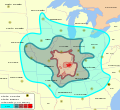 1968 Illinois earthquake
 -
 1906 San Francisco earthquake seismograph
 -
 USGS-FS017-03 Madrid


Ad. Transform your life with W8MD's
GLP-1 weight loss injections special from $29.99


W8MD Medical Weight Loss, Sleep and Medspa offers physician-supervised medical weight loss programs: NYC medical weight loss Philadelphia medical weight loss
Affordable GLP-1 Weight Loss ShotsAffordable GLP-1 Weight Loss Shots
Budget GLP-1 injections NYC (insurance & self-pay options) Popular treatments:
- Semaglutide starting from $29.99/week
- Tirzepatide starting from $45.00/week
✔ Most insurances accepted for visits ✔ Prior authorization support when eligible
Start your physician weight loss NYC journey today:
📍 NYC: Brooklyn weight loss center 📍 Philadelphia: Philadelphia weight loss center
📞 Call: 718-946-5500 (NYC) | 215-676-2334 (Philadelphia)
Tags: Affordable GLP1 weight loss NYC, Wegovy NYC, Zepbound NYC, Philadelphia medical weight loss


|
WikiMD Medical Encyclopedia |
Medical Disclaimer: WikiMD is not a substitute for professional medical advice. The information on WikiMD is provided as an information resource only, may be incorrect, outdated or misleading, and is not to be used or relied on for any diagnostic or treatment purposes. Please consult your health care provider before making any healthcare decisions or for guidance about a specific medical condition. WikiMD expressly disclaims responsibility, and shall have no liability, for any damages, loss, injury, or liability whatsoever suffered as a result of your reliance on the information contained in this site. By visiting this site you agree to the foregoing terms and conditions, which may from time to time be changed or supplemented by WikiMD. If you do not agree to the foregoing terms and conditions, you should not enter or use this site. See full disclaimer.
Credits:Most images are courtesy of Wikimedia commons, and templates, categories Wikipedia, licensed under CC BY SA or similar.
Translate this page: - East Asian
中文,
日本,
한국어,
South Asian
हिन्दी,
தமிழ்,
తెలుగు,
Urdu,
ಕನ್ನಡ,
Southeast Asian
Indonesian,
Vietnamese,
Thai,
မြန်မာဘာသာ,
বাংলা
European
español,
Deutsch,
français,
Greek,
português do Brasil,
polski,
română,
русский,
Nederlands,
norsk,
svenska,
suomi,
Italian
Middle Eastern & African
عربى,
Turkish,
Persian,
Hebrew,
Afrikaans,
isiZulu,
Kiswahili,
Other
Bulgarian,
Hungarian,
Czech,
Swedish,
മലയാളം,
मराठी,
ਪੰਜਾਬੀ,
ગુજરાતી,
Portuguese,
Ukrainian
