Secosteroid
Secosteroids are a subclass of steroidal compounds that result from the cleavage of bonds within steroids. They are a type of biomolecule that plays various roles in biological systems, particularly in the regulation of metabolism, immune system function, and calcium homeostasis. Secosteroids are derived from the seco- prefix, indicating that these compounds are steroids with "broken" or cleaved rings. This structural modification significantly influences their biological activity and function.
Structure and Classification[edit]
Secosteroids are characterized by a core 17-carbon steroid structure, where one of the carbon rings has been cleaved, leading to a more open structure compared to other steroids. This structural alteration allows secosteroids to interact uniquely with cell receptors and enzymes, influencing various physiological processes. The most well-known secosteroids include vitamin D compounds, which are crucial for calcium and phosphate metabolism, bone health, and immune function.
Vitamin D as a Secosteroid[edit]
Vitamin D is the most prominent example of a secosteroid. It exists in several forms, with Vitamin D2 (ergocalciferol) and Vitamin D3 (cholecalciferol) being the most significant for human health. Vitamin D3 is synthesized in the skin from 7-dehydrocholesterol upon exposure to ultraviolet (UV) radiation from sunlight, while vitamin D2 is obtained from dietary sources or supplements. Both forms of vitamin D are converted in the liver to 25-hydroxyvitamin D, the major circulating form, and then further hydroxylated in the kidneys to the active form, 1,25-dihydroxyvitamin D.
Biological Functions[edit]
Secosteroids, particularly vitamin D compounds, play a critical role in maintaining calcium and phosphate levels in the blood, which is essential for normal bone formation, muscle function, and nerve transmission. They achieve this by promoting the absorption of calcium and phosphate from the gut, reabsorption in the kidneys, and mobilization from bone tissue.
In addition to their role in mineral homeostasis, secosteroids have been implicated in modulating the immune system. They can influence the activity of immune cells, potentially reducing the risk of autoimmune diseases and infections. Furthermore, research suggests that secosteroids may have protective roles against certain types of cancer, particularly those related to the digestive tract, through their effects on cell proliferation and differentiation.
Clinical Implications[edit]
Given their crucial roles in the body, abnormalities in secosteroid metabolism or action can lead to various health issues. Deficiency in vitamin D, for example, can result in rickets in children and osteomalacia in adults, both of which are characterized by weakened, poorly mineralized bones. Conversely, excessive vitamin D levels can cause hypercalcemia, leading to vascular and tissue calcification, kidney stones, and other complications.
Conclusion[edit]
Secosteroids, with vitamin D as a prime example, are essential biomolecules that influence a wide range of physiological processes, from bone health to immune function. Understanding their structure, function, and the consequences of their deficiency or excess is crucial for maintaining human health.
.svg) | This biochemistry article is a stub. You can help WikiMD by expanding the page. |
 | This article about a steroid is a stub. You can help WikiMD by expanding the page. |
Secosteroid[edit]
-
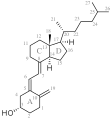 Cholecalciferol numbered
 -
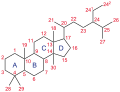 Trimethyl steroid nomenclature


Medical Disclaimer: WikiMD is for informational purposes only and is not a substitute for professional medical advice. Content may be inaccurate or outdated and should not be used for diagnosis or treatment. Always consult your healthcare provider for medical decisions. Verify information with trusted sources such as CDC.gov and NIH.gov. By using this site, you agree that WikiMD is not liable for any outcomes related to its content. See full disclaimer.
Credits:Most images are courtesy of Wikimedia commons, and templates, categories Wikipedia, licensed under CC BY SA or similar.
Translate page: - East Asian
中文,
日本,
한국어,
South Asian
हिन्दी,
தமிழ்,
తెలుగు,
Urdu,
ಕನ್ನಡ,
Southeast Asian
Indonesian,
Vietnamese,
Thai,
မြန်မာဘာသာ,
বাংলা
European
español,
Deutsch,
français,
Greek,
português do Brasil,
polski,
română,
русский,
Nederlands,
norsk,
svenska,
suomi,
Italian
Middle Eastern & African
عربى,
Turkish,
Persian,
Hebrew,
Afrikaans,
isiZulu,
Kiswahili,
Other
Bulgarian,
Hungarian,
Czech,
Swedish,
മലയാളം,
मराठी,
ਪੰਜਾਬੀ,
ગુજરાતી,
Portuguese,
Ukrainian

