SeHCAT
SeHCAT (or Selenium-75-homocholic acid taurine) is a synthetic bile acid analogue radiolabelled with the gamma-emitting isotope selenium-75. It is used in a clinical test to diagnose bile acid malabsorption.
Overview[edit]
SeHCAT is a radiopharmaceutical used in the SeHCAT test for diagnosing bile acid malabsorption in conditions such as Irritable Bowel Syndrome (IBS) and Crohn's disease. The test involves two scans, one week apart, using a gamma camera. The percentage retention of SeHCAT after 7 days gives a measure of bile acid malabsorption, with less than 15% retention being indicative of bile acid malabsorption.
Mechanism of Action[edit]
SeHCAT is a synthetic bile acid analogue which is absorbed in the ileum and excreted in the bile. It is used to measure the rate of bile acid loss, which is increased in conditions such as Crohn's disease and Irritable Bowel Syndrome (IBS).
Clinical Use[edit]
The SeHCAT test is used to diagnose bile acid malabsorption, which can cause symptoms such as chronic diarrhoea. The test can help to differentiate between bile acid malabsorption and other causes of chronic diarrhoea, such as Irritable Bowel Syndrome (IBS).
Side Effects[edit]
As SeHCAT is a radiopharmaceutical, there is a small risk of radiation exposure. However, the amount of radiation used in the SeHCAT test is very small and the benefits of the test generally outweigh the risks.
See Also[edit]

This WikiMD article can only be edited by registered and verified editors. You can log in or register.
-
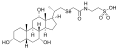 SeHCAT

Advertise on WikiMD — 81,000+ full articles, ~900,000 total pages, ~250 million page views. Global reach, limited time promotional rates from $1/page/day. Learn more · View stats


Translate page: - East Asian
中文,
日本,
한국어,
South Asian
हिन्दी,
தமிழ்,
తెలుగు,
Urdu,
ಕನ್ನಡ,
Southeast Asian
Indonesian,
Vietnamese,
Thai,
မြန်မာဘာသာ,
বাংলা
European
español,
Deutsch,
français,
Greek,
português do Brasil,
polski,
română,
русский,
Nederlands,
norsk,
svenska,
suomi,
Italian
Middle Eastern & African
عربى,
Turkish,
Persian,
Hebrew,
Afrikaans,
isiZulu,
Kiswahili,
Other
Bulgarian,
Hungarian,
Czech,
Swedish,
മലയാളം,
मराठी,
ਪੰਜਾਬੀ,
ગુજરાતી,
Portuguese,
Ukrainian
About WikiMD • Contact • Disclaimer • Privacy • Copyright • Site statistics
Some content and images may originate from Wikimedia Commons or Wikipedia and remain subject to their stated licenses. Unless otherwise noted, eligible WikiMD content is available under CC BY-SA 4.0.
WikiMD Wellnesspedia — Free health & wellness information for patients, students, and health professionals.

