Scientific Revolution
The Scientific Revolution was a period of profound change in the way that humans perceived the natural world. It marked a departure from the medieval understanding of the universe, heavily influenced by the teachings of the church and ancient philosophers, to a perspective based on empirical evidence and the scientific method. This transformative period, which spanned the 16th to the 18th centuries, laid the groundwork for modern science.
Origins and Causes[edit]
The origins of the Scientific Revolution can be traced back to the Renaissance, which fostered an environment of curiosity and a willingness to question traditional beliefs. The invention of the printing press by Johannes Gutenberg around 1440 played a crucial role in the dissemination of new ideas. Additionally, the fall of Constantinople in 1453 led to an influx of Greek and Roman texts into Europe, stimulating intellectual revival.
Key Figures[edit]
Several key figures were instrumental in the Scientific Revolution, each contributing to different fields of science:
- Nicolaus Copernicus (1473–1543) challenged the geocentric model of the universe with his heliocentric theory, proposing that the Earth and other planets orbit the sun.
- Galileo Galilei (1564–1642) made significant advancements in astronomy with the use of the telescope and supported the Copernican theory, which led to conflict with the Catholic Church.
- Johannes Kepler (1571–1630) formulated the laws of planetary motion, which described the orbits of planets around the sun.
- Isaac Newton (1642–1727) unified the laws of motion and universal gravitation, laying the foundation for classical mechanics.
Impact[edit]
The Scientific Revolution had a profound impact on society and the way in which the world was understood:
- It challenged the authority of the church in the realm of science, promoting a view of the world based on observation and reason rather than religious doctrine.
- The development of the scientific method provided a systematic way to investigate natural phenomena and acquire knowledge.
- Advances in mathematics, physics, astronomy, biology, and chemistry transformed the natural sciences.
- The revolution contributed to the Enlightenment, a period in which reason was advocated as the primary source of authority and legitimacy.
Legacy[edit]
The legacy of the Scientific Revolution is evident in the modern world, where empirical evidence and the scientific method continue to underpin scientific inquiry. It marked the beginning of a new era in which science and technology have become the driving forces of societal progress.
See Also[edit]

-
 Astronomer Copernicus: Conversation with God
 -
 Galileo Galilei by Ottavio Leoni
 -
 Astronomia Nova
 -
 Peuerbach Superioribus
 -
 Francis Bacon
 -
 De Magnete by William Gilbert
 -
 Sir Isaac Newton by Sir Godfrey Kneller
 -
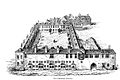 Gresham College from Record of the Royal Society
 -
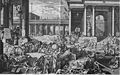 Académie des Sciences 1698
 -
 Johannes Kepler

.jpg)


Sponsored Health Resource

W8MD Weight Loss, Sleep & MedSpa
Looking for physician-supervised weight loss, semaglutide, tirzepatide, or GLP-1 receptor agonist options? W8MD helps eligible patients in New York City, Brooklyn, New Jersey, Connecticut, Pennsylvania, Delaware, and greater Philadelphia with medical weight loss, sleep medicine, and long-term maintenance support.
GLP-1 specials: Affordable GLP-1 injections NYC and Philadelphia starting from $29.99/week and up for semaglutide with insurance accepted for qualifying visits, and $45/week and up for tirzepatide with insurance accepted for qualifying visits. Self-pay options start from $59.99/week and up for semaglutide and $69.99/week and up for tirzepatide.
Medical weight loss NYC | Affordable GLP-1 injections NYC | Budget GLP-1 weight loss shots Philadelphia | New Jersey medical weight loss | NYC medical weight loss | Philadelphia medical weight loss | Sleep clinic NYC | W8MD's Philadelphia GLP-1 doctor | Weight loss prescriptions NYC
Book a W8MD appointment · View GLP-1 specials
Paid promotional message. Eligibility, pricing, insurance coverage, medication availability, and results vary. Medical evaluation required.

Medical Disclaimer: WikiMD is for informational purposes only and is not a substitute for professional medical advice. Content may be inaccurate or outdated and should not be used for diagnosis or treatment. Always consult your healthcare provider for medical decisions. Verify information with trusted sources such as CDC.gov and NIH.gov. By using this site, you agree that WikiMD is not liable for any outcomes related to its content. See full disclaimer.
Credits:Most images are courtesy of Wikimedia commons, and templates, categories Wikipedia, licensed under CC BY SA or similar.
Translate page: - East Asian
中文,
日本,
한국어,
South Asian
हिन्दी,
தமிழ்,
తెలుగు,
Urdu,
ಕನ್ನಡ,
Southeast Asian
Indonesian,
Vietnamese,
Thai,
မြန်မာဘာသာ,
বাংলা
European
español,
Deutsch,
français,
Greek,
português do Brasil,
polski,
română,
русский,
Nederlands,
norsk,
svenska,
suomi,
Italian
Middle Eastern & African
عربى,
Turkish,
Persian,
Hebrew,
Afrikaans,
isiZulu,
Kiswahili,
Other
Bulgarian,
Hungarian,
Czech,
Swedish,
മലയാളം,
मराठी,
ਪੰਜਾਬੀ,
ગુજરાતી,
Portuguese,
Ukrainian

