Schistosomiasis vaccine
Schistosomiasis vaccine is a proposed vaccine for Schistosomiasis, a parasitic disease caused by several species of flatworms or schistosomes. The disease is spread by contact with water contaminated with the parasites. These parasites are released from infected freshwater snails. The disease is especially common among children in developing countries as they are more likely to play in contaminated water. Other high-risk groups include farmers, fishermen, and people using unclean water during daily living.
Development[edit]
The development of a vaccine for schistosomiasis has been a focus of research for many years. The World Health Organization (WHO) has identified schistosomiasis as a disease for which a vaccine is urgently needed. Despite the efforts, no vaccine is currently available for human use. The main challenges in developing a vaccine include the complex life cycle of the parasite and the lack of a suitable animal model for testing potential vaccines.
Potential vaccines[edit]
Several potential vaccines are currently under investigation. These include vaccines based on recombinant proteins, DNA vaccines, and vaccines using live attenuated parasites. Some of these potential vaccines have shown promise in early-stage clinical trials.
Clinical trials[edit]
Clinical trials are an essential part of the vaccine development process. They are used to test the safety and efficacy of potential vaccines in humans. Several potential schistosomiasis vaccines have undergone clinical trials. The results of these trials are used to determine whether a vaccine is safe and effective enough to be approved for use.
Future prospects[edit]
The development of a schistosomiasis vaccine is a priority for global health. A successful vaccine would not only reduce the burden of disease but also contribute to the goal of schistosomiasis elimination. Despite the challenges, researchers are optimistic that a vaccine can be developed.
See also[edit]

This WikiMD article can only be edited by registered and verified editors. You can log in or register.
-
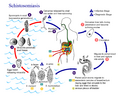 Schistosomiasis Life Cycle


Medical Disclaimer: WikiMD is for informational purposes only and is not a substitute for professional medical advice. Content may be inaccurate or outdated and should not be used for diagnosis or treatment. Always consult your healthcare provider for medical decisions. Verify information with trusted sources such as CDC.gov and NIH.gov. By using this site, you agree that WikiMD is not liable for any outcomes related to its content. See full disclaimer.
Credits:Most images are courtesy of Wikimedia commons, and templates, categories Wikipedia, licensed under CC BY SA or similar.
Translate page: - East Asian
中文,
日本,
한국어,
South Asian
हिन्दी,
தமிழ்,
తెలుగు,
Urdu,
ಕನ್ನಡ,
Southeast Asian
Indonesian,
Vietnamese,
Thai,
မြန်မာဘာသာ,
বাংলা
European
español,
Deutsch,
français,
Greek,
português do Brasil,
polski,
română,
русский,
Nederlands,
norsk,
svenska,
suomi,
Italian
Middle Eastern & African
عربى,
Turkish,
Persian,
Hebrew,
Afrikaans,
isiZulu,
Kiswahili,
Other
Bulgarian,
Hungarian,
Czech,
Swedish,
മലയാളം,
मराठी,
ਪੰਜਾਬੀ,
ગુજરાતી,
Portuguese,
Ukrainian

